Adventure Sailing’s story starts aboard a family cruising catamaran rather than inside a conventional classroom. When the family returned to Western Australia and settled for the daughters’ high-school years, that lived experience became the seed of a training business.
The school now operates from Port Geographe Marina with 14 boats, year-round local sailing and seasonal passages to the Abrolhos Islands. Its account of the work shows a consistent philosophy: students learn by joining the rhythms and responsibilities of life aboard.
Adventure Sailing
School team
Adventure Sailing is based at Port Geographe Marina in Western Australia. The school grew from a family cruising experience and now works across recreational sailing, liveaboard catamaran courses and commercial maritime training.
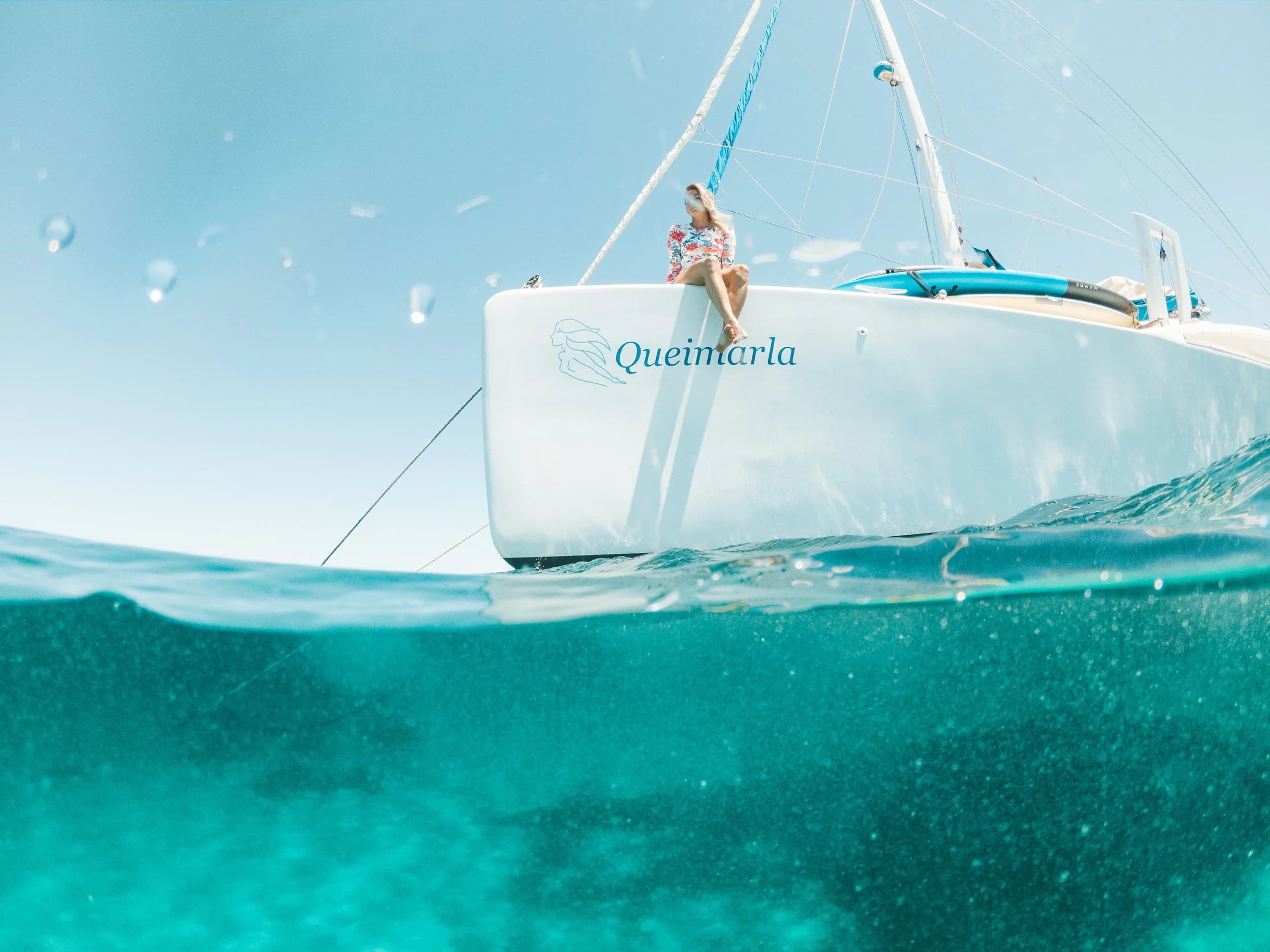
Its fleet ranges from dinghies and small sailing boats to the 20-metre ketch Starsand and the 13.85-metre performance catamaran Queimarla. Training is delivered in Geographe Bay and, seasonally, around the Abrolhos Islands.
Training covered in the interview
- Recreational and liveaboard sailing
- International Yacht Training certificates
- Coxswain and Master 24 training
- Women-only sailing programmes
“A typical day onboard starts with a swim and coffee.”— Adventure Sailing, Adventure Sailing
A school shaped by family cruising
The origin story gives Adventure Sailing a distinctive point of view. Living, cruising and schooling children aboard a family catamaran made the boat a home, transport, classroom and daily system all at once. When the family returned and settled ashore for high school, the practical knowledge accumulated aboard became the foundation for the school.
Adventure Sailing first operated from Geographe Bay Yacht Club. An office at Port Geographe Marina created direct access to the fleet and protected water for year-round activity, turning a sailing project into a base with room to grow.
Why Geographe Bay suits practical teaching
Geographe Bay’s north-facing coastline and regular southerly winds can produce fast sailing without the same sea state found on a fully exposed coast. The combination gives instructors useful conditions for demonstrating trim, steering and manoeuvres while remaining close to protected marina water.
The local yacht clubs and social sailing scene matter as much as the geography. A course is only the start of a sailor’s development; nearby opportunities to crew and practise make it easier to keep skills alive after formal training finishes.
The catamaran course begins before departure
The liveaboard catamaran course starts with a boat induction, bunk allocation and traditional navigation work, normally on the afternoon before departure. That early orientation gives students time to understand the vessel as a working environment before the first full sailing day.
Once underway, the day is structured around participation: steering, winch safety, setting and trimming sails, tacking, gybing, heaving-to and practising man-overboard recovery under sail. The goal is not simply to experience a catamaran, but to share the work required to operate one.
Certificates connected to a charter goal
On the five-day liveaboard course, Adventure Sailing says students work towards a VHF radio licence, an International Bareboat Skipper certificate and an International Certificate of Competency issued through International Yacht Training.
Prospective students should still confirm the entry requirements and acceptance of any certificate for the country, charter operator and vessel they intend to use. The practical strength of the course is the way radio, navigation and boat-handling skills are taught in the same liveaboard context rather than as isolated subjects.
Women-only programmes change the learning atmosphere
She Skipper and She Sails were created to give women a relaxed, non-competitive setting in which to learn. The school’s description is less about changing the syllabus than changing the social dynamics around it.
That distinction can matter. Confidence at the helm often grows when there is room to ask questions, repeat manoeuvres and make decisions without feeling that a more experienced voice will take over. Adventure Sailing says more women-only recreational skipper and overnight liveaboard options are being developed for 2027.
Commercial training is deliberately immersive
The Coxswain and Master 24 training described by the school takes place aboard its 20-metre training ship. Students stand watches, navigate, handle the vessel, cook and operate small boats—an attempt to make the course resemble working life at sea rather than a sequence of shore-based assessments.
Adventure Sailing also uses locations such as Geographe Bay and the Abrolhos Islands. The setting adds complexity and purpose, but the deeper benefit is continuity: students see how watchkeeping, maintenance, navigation, meals and teamwork connect across an entire day.
A fleet with two very different flagships
Adventure Sailing reports a fleet of 14 boats, from a 3.5-metre dinghy and small sailing craft to powerboats and two larger vessels. Starsand is a 20-metre sailing ketch with traditional timber-and-brass character, accommodation for up to 10 overnight guests and capacity for larger day groups.
Queimarla is a 13.85-metre performance sailing catamaran that can sleep six or carry 10 people for day sailing. Together the two vessels allow the school to move between classic monohull seamanship, catamaran performance, overnight routines and commercial training.
A day aboard blends routine and exploration
A typical liveaboard day begins with a swim and coffee before the crew moves into cooking, navigation, engineering checks and departure preparation. Skills are revised as the boat moves, rather than saved for a separate classroom block.
The day then opens into sailing and exploring, followed by anchoring, a sunset drink and dinner. Shore visits and snorkelling may be included. This mixture is central to the appeal: the course is structured, but it also demonstrates why people want the competence to cruise independently.
Conditions, seasons and the next chapter
Adventure Sailing operates all year from Port Geographe. It describes April to June and August to September as its Abrolhos periods, with the larger boats returning from Geraldton around October for the summer season.
Winter on the west coast can alternate between light days and strong gales. The school presents changeable conditions as a learning opportunity when it is safe to proceed with experienced sailors aboard. Plans for 2027 include more women-only training, Abrolhos escapes aboard Starsand, introductory three-day catamaran courses and continued work with Indigenous sea rangers, schools and maritime organisations.