
Home / Australian Sailing / Tackers Sailing Courses
Tackers Sailing Courses
Australian Sailing’s junior program, built around fun and water confidence first and sailing technique second.
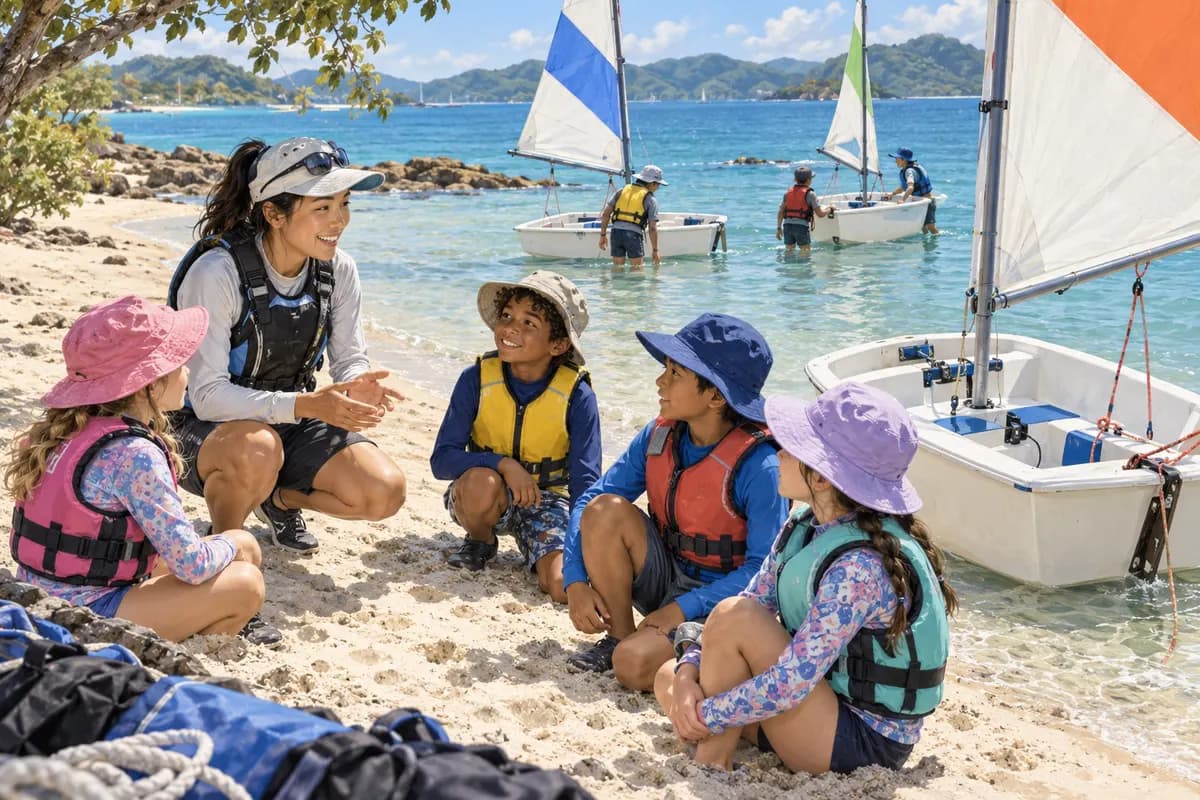
Tackers is the Australian Sailing junior pathway.
Current Tackers course listings include:
Australian Sailing describes Tackers 1 as a games-based introduction primarily aimed at children aged 7 to 12, while Tackers 2 and 3 progressively develop independence and sailing technique.
Tackers Intro
**Purpose:** Try sailing before committing to the full program.
**Typical student:** Child with little or no sailing experience.
**What comes next:** Tackers 1.
Tackers 1
**Purpose:** Learn basic sailing through games.
Students begin learning:
Tackers 2
Develops:
Tackers 3
Develops:
- Who it suits
- Children from about seven who are comfortable in the water.
- What it is not
- It is not a qualification, and it is not a race squad. Both come later if the child wants them.
Primary source: Australian Sailing courses. Course structures and prerequisites can change; confirm the current version with the training body and school.
The course in context
Tackers introduces children to sailing through games, activities and practical time in small boats. Its three stages allow skills and confidence to develop progressively. For a first course, the quality of the learning environment matters more than how quickly a child moves to the next certificate.
Before you start
The programme is designed for ages 7–12. Ask the centre about water confidence, group arrangements and any additional support your child needs. Previous sailing is not necessary for Tackers 1, but later stages build on earlier skills.
Skills you will develop
Comfort afloat
Children become familiar with the boat and the routines of a supervised sailing session. Enjoyment and confidence help them engage with unfamiliar tasks.
Steering and sail handling
Practical activities connect the controls with the boat’s movement. Skills are introduced in manageable steps rather than through long technical explanations.
Growing independence
Later stages build on the foundations and encourage more responsibility. Progress should reflect what the child can demonstrate, not simply their age or attendance.
Training and assessment
Centres offer school-holiday and regular-session programmes. Australian Sailing describes Tackers 1 as approximately 20 hours; confirm the local schedule and weather arrangements. Ask what is provided and how instructors communicate progress to parents.
Questions to ask the school
- Which Tackers stage suits my child?
- What happens in unsuitable weather?
- How are nervous beginners supported?
Related learning
Before and after
Other Australian Sailing courses
OutThere Sailing for Teenagers
For teenagers who have outgrown Tackers and are not ready for an adult course.
Australian Sailing Dinghy Courses
The most widely available learn-to-sail route in the country, and the fastest way to real wind awareness.
Australian Sailing Keelboat Courses
Start Crewing, Start Helming, Start Skippering — a stable boat and a natural bridge toward yachts.
Australian Sailing Safety & Sea Survival
Two days on what to do when it goes seriously wrong offshore, including a liferaft session in the pool.
Australian Sailing Powerboat Courses for Sailors
More relevant to sailors than the name suggests: nearly all rescue and support work happens from a powerboat.
Australian Sailing Instructor Pathway
The domestic route into teaching, and where most Australian sailing instructors begin.
Australian schools using Australian Sailing
These schools advertise training under the Australian Sailing system. This does not confirm that every school currently runs Tackers Sailing Courses; check the current course list directly.
Which course should you actually book?
Three questions — your experience, the boat you want to sail, and your goal — give you a starting course and the schools that teach it near you.