
What this training covers
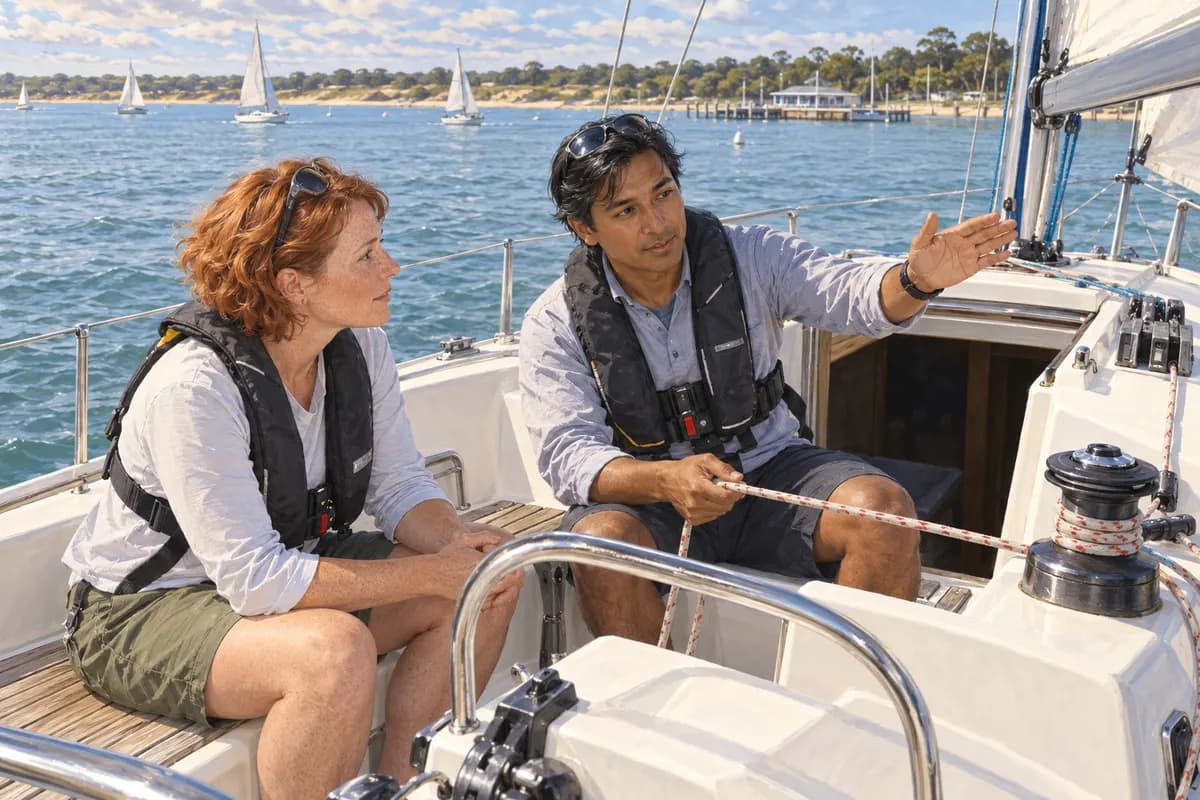
Adults can learn through:
There is no age at which someone is "too late" to begin learning recreational sailing, provided they can safely participate in the chosen course.
Course names and content vary between schools, and this is a description of the training rather than one school’s syllabus. Check what a particular course actually includes — and on which boat — before booking.
The course in context
Adult beginner training should match the kind of sailing you want to enjoy. Dinghies make balance and wind effects immediate; small keelboats emphasise coordinated sailing; cruising yachts add a different environment and crew routine. None requires you to have learned as a child.
Before you start
Be honest about experience, water confidence and any physical concerns. Ask the school to explain boarding and movement on the actual boat. A well-matched beginner group is more useful than choosing a course because its title sounds more advanced.
Skills you will develop
Boat control
Learn how steering and sails work together. Repetition with feedback helps unfamiliar movements become less demanding.
Practical language
Understand instructions by connecting words to tasks and equipment. You do not need to memorise a dictionary before your first lesson.
Confidence and awareness
Develop safe routines while noticing the wind, other boats and the crew. Confidence should grow from supported experience rather than pressure to appear fearless.
Training and assessment
Compare recurring lessons, weekend blocks and liveaboard courses. Consider time for consolidation as well as attendance. Ask whether the programme is a named qualification or the school’s own introductory syllabus.
Questions to ask the school
- Which boat type suits my goal?
- How are adult beginners grouped?
- What can I do regularly after the course?
Related learning
Learn to sail
Sailing Taster and Try Sailing Courses
Try sailing and taster courses — a few hours afloat with no commitment, and how to tell a real introductory lesson from a passenger experience.
Sailing Courses for Couples
Sailing courses for couples in Australia — why both partners should be able to handle the boat, and what to look for in training designed for two.
Private Sailing Lessons
Private sailing lessons in Australia — one-to-one tuition at your own pace, on a school boat or your own yacht.
Where this sits in the schemes
Training like this is taught both as a named certificate within a scheme and as standalone tuition by independent schools. If you want a certificate at the end, start from the scheme; if you only want the skill, an afternoon with a good instructor may serve you better.
Is this the right training for you right now?
Three questions — have you sailed before, what boat do you want to sail, and what is your goal — give you a starting course and the schools that teach it near you.