
Home / RYA / RYA Start Sailing (Dinghy Level 1)
RYA Start Sailing (Dinghy Level 1)
Two days, no experience assumed, and by the end you have sailed a dinghy with an instructor aboard.
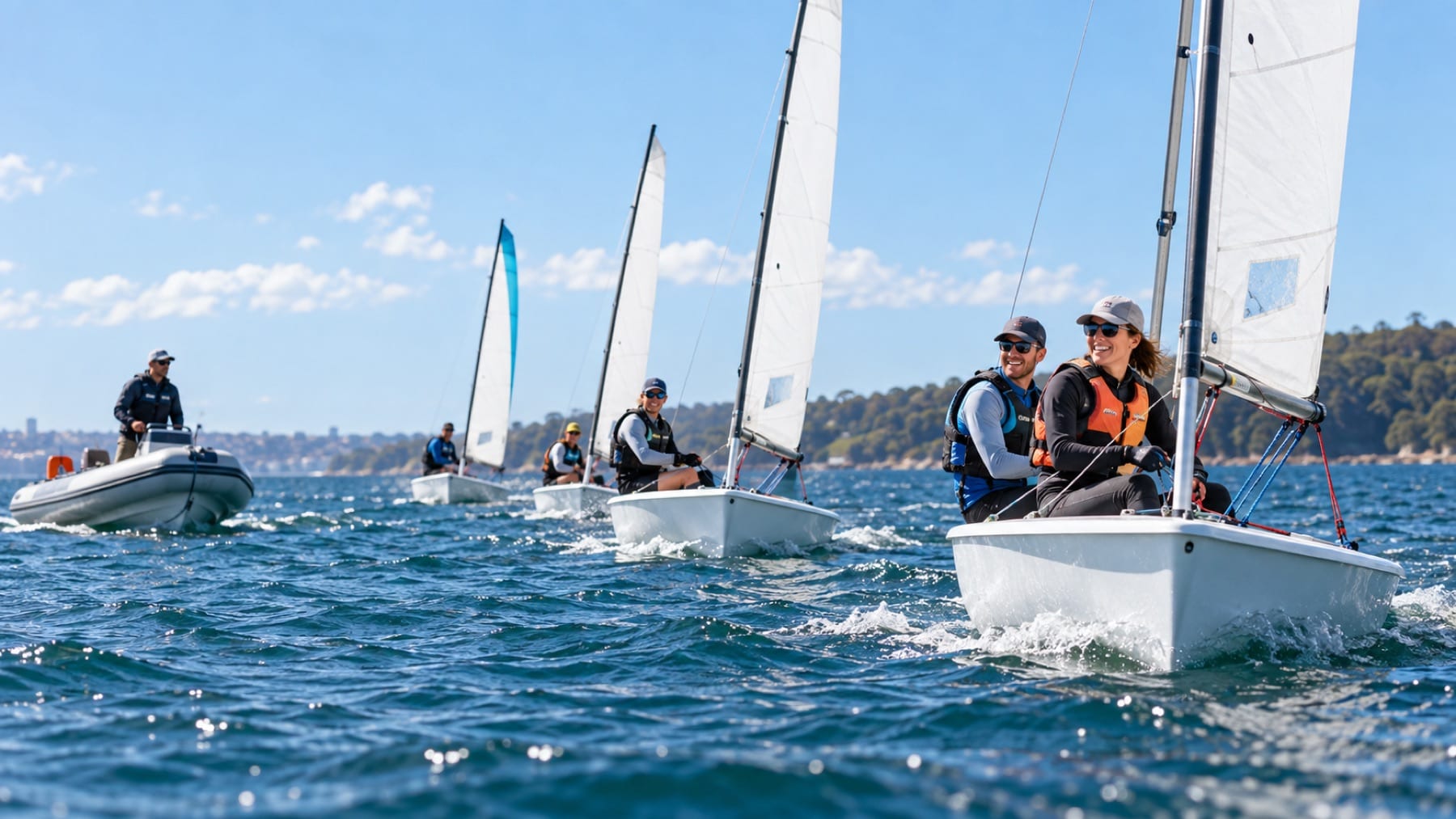
Start Sailing is the entry point to the RYA Dinghy Sailing Scheme. RYA currently describes it as a two-day course with no previous experience required.
It covers the groundwork a dinghy sailor needs before they can be useful in a boat:
How it actually runs
Most of the two days is afloat, in a stable training dinghy, usually two or three students to a boat with an instructor. Sheltered water is the norm — a lake, an estuary or a protected harbour reach rather than open coast.
The certificate records that you have sailed under instruction. Sailing unaided is the subject of Level 2.
- Who it suits
- Complete beginners who want to learn in a small, responsive boat rather than a yacht.
- What it is not
- Not a licence to take a boat out alone. Level 1 sails under instruction throughout.
Primary source: RYA training. Course structures and prerequisites can change; confirm the current version with the training body and school.
The course in context
Level 1 introduces adult learners to controlling a dinghy with the wind. The boat responds quickly, making this a useful way to understand sailing rather than simply watch it. Expect unfamiliar sensations at first: changes in balance and sail pressure are part of the learning experience.
Before you start
No sailing experience is required. Discuss swimming confidence, mobility and clothing with the centre. The RYA recommends its youth scheme for younger learners, so ask which programme and group are appropriate rather than choosing solely by course title.
Skills you will develop
Wind awareness
Recognise where the wind is coming from and connect that with the direction the dinghy can sail. This is the foundation for sensible steering and sail adjustment.
Basic control
Coordinate tiller and sheet while learning simple turns. The aim is understanding the boat’s response with instructor support.
Launching and returning
Become familiar with shore-side preparation and the transition between land and water. The sailing session begins before you leave the beach or pontoon.
Training and assessment
The RYA describes approximately two days or 16 hours of training. The outcome is introductory sailing under supervision, not independent sailing in all conditions. Check how weather changes affect the local programme.
Questions to ask the school
- Will I sail alone or with another learner?
- What kit is supplied?
- How soon can I take Level 2?
Related learning
Other RYA courses
RYA Sailing Pathway
The whole RYA cruising route in order, and where you are allowed to skip a step.
RYA Cruising Level 1: Start Sailing
A short introduction aboard a small cruising yacht — the shortest way to find out whether yachting suits you.
RYA Cruising Level 2: Basic Skills
The follow-on from Level 1, adding real boat handling on a small cruising yacht.
RYA Start Yachting
Two days aboard a cruising yacht, for complete beginners who want a genuine taste of yachting.
RYA Day Skipper Theory
The classroom half of Day Skipper: charts, tides, buoyage, collision regulations and passage planning.
RYA Day Skipper Practical Sailing
Five days in which you stop being crew and start being the person responsible for the boat.
RYA Coastal Skipper Practical
Skippering beyond familiar water and beyond daylight — longer passages, night pilotage, heavier weather.
RYA Coastal Skipper and Yachtmaster Offshore Theory
The advanced shorebased course: tidal work, passage planning, meteorology and collision regulations at Yachtmaster depth.
Australian schools using RYA
These schools advertise training under the RYA system. This does not confirm that every school currently runs RYA Start Sailing (Dinghy Level 1); check the current course list directly.
Which course should you actually book?
Three questions — your experience, the boat you want to sail, and your goal — give you a starting course and the schools that teach it near you.