- The goal
- Charter a yacht or catamaran in the Whitsundays and sail it yourself.
- Assumes you have
- Some sailing, or a willing crew member who has some.
- How long, honestly
- A capable beginner can be ready in one season. Many charterers arrive with a five-day course and a handful of day sails.
- What it is not
- Not a licence to sail anywhere else. The Whitsundays are sheltered, well-charted and heavily supported; that is not what the Bass Strait is like.
Step by step
Learn to sail a cruising yacht
Competent Crew, IYT International Crew or an Australian Sailing keelboat course. Any of them puts you on a yacht with instruction.
Learn anchoring properly
Whitsundays cruising is anchoring, not marina-hopping. You will anchor every night, often in a fringing-reef bay with a tidal range.
Get a skipper certificate if the operator asksoptional
Day Skipper Practical or IYT Bareboat Skipper. Ask the operator first — some accept a résumé and their own briefing instead.
Learn the boat you are actually chartering
Most Whitsundays bareboats are catamarans. A monohull sailor is not automatically a catamaran skipper — the handling, the anchoring and the windage are all different.
Sit the check-out briefing seriously
The operator briefing is where the real assessment happens: systems, radio schedule, permitted anchorages, exclusion zones and the daily call-in.
The Whitsundays are the reason a lot of Australians learn to sail at all. Short passages, reliable trade winds for much of the year, sheltered water inside the islands and a bay to anchor in at the end of every day.
Why the qualification question is confusing here
Whitsundays bareboat operators run a managed model: a daily radio schedule, a defined cruising area, published no-go zones, and shore support that will come to you. That support is why several operators are willing to charter to sailors without a formal certificate — the briefing and the radio schedule do work that a certificate does elsewhere.
This varies by operator and changes over time. Confirm the current requirement with the operator you intend to book, in writing, before you book a course specifically to satisfy it.
What actually catches people out
- anchoring in eight to ten metres with a big tidal range
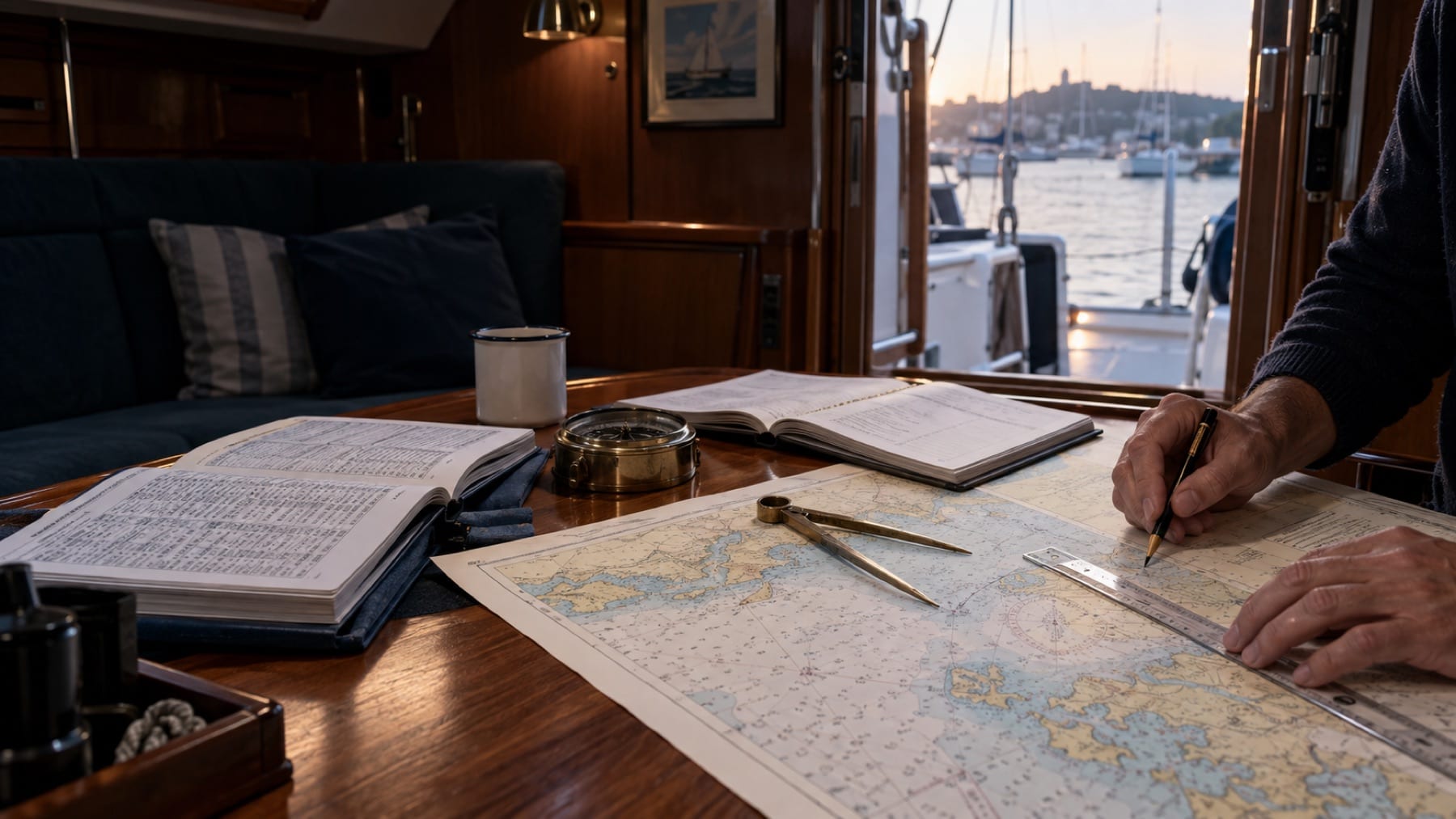
- reef and fringing coral marked on the chart but not visible at high water
- the afternoon trade-wind build, which is stronger than the morning suggests
- catamaran windage when coming alongside or picking up a mooring
- stinger season and the reef-safe anchoring rules in the marine park
None of these are hard. All of them are easier to learn before the charter than during it, which is the whole argument for doing a course first even where the operator does not require one.
Marine park rules are not optional
The Whitsundays sit inside the Great Barrier Reef Marine Park, which has zoning, anchoring and no-anchoring provisions that apply regardless of your qualification. Operators brief these; check the current zoning maps yourself as well, because responsibility sits with the skipper on the day.
Every pathway
I want to charter a yacht
Hire a yacht without a skipper and sail it yourself.
I just bought a boat
Sail your own yacht confidently, including short-handed and in a crosswind berth.
We want to sail as a couple
Both of you able to sail the boat, including bringing her home without the other.
I want to sail offshore
Make ocean and extended coastal passages, as crew or as skipper.
I want to race
Race regularly at a club, as crew or on your own boat.
I want to teach sailing
Qualify to teach sailing at a club or a commercial school.
I want to work on boats
Be paid to operate or crew a vessel in Australia.
Not sure this is your pathway?
Three questions — your experience, the boat you want to sail, and your goal — give you a starting course and the schools that teach it near you.