
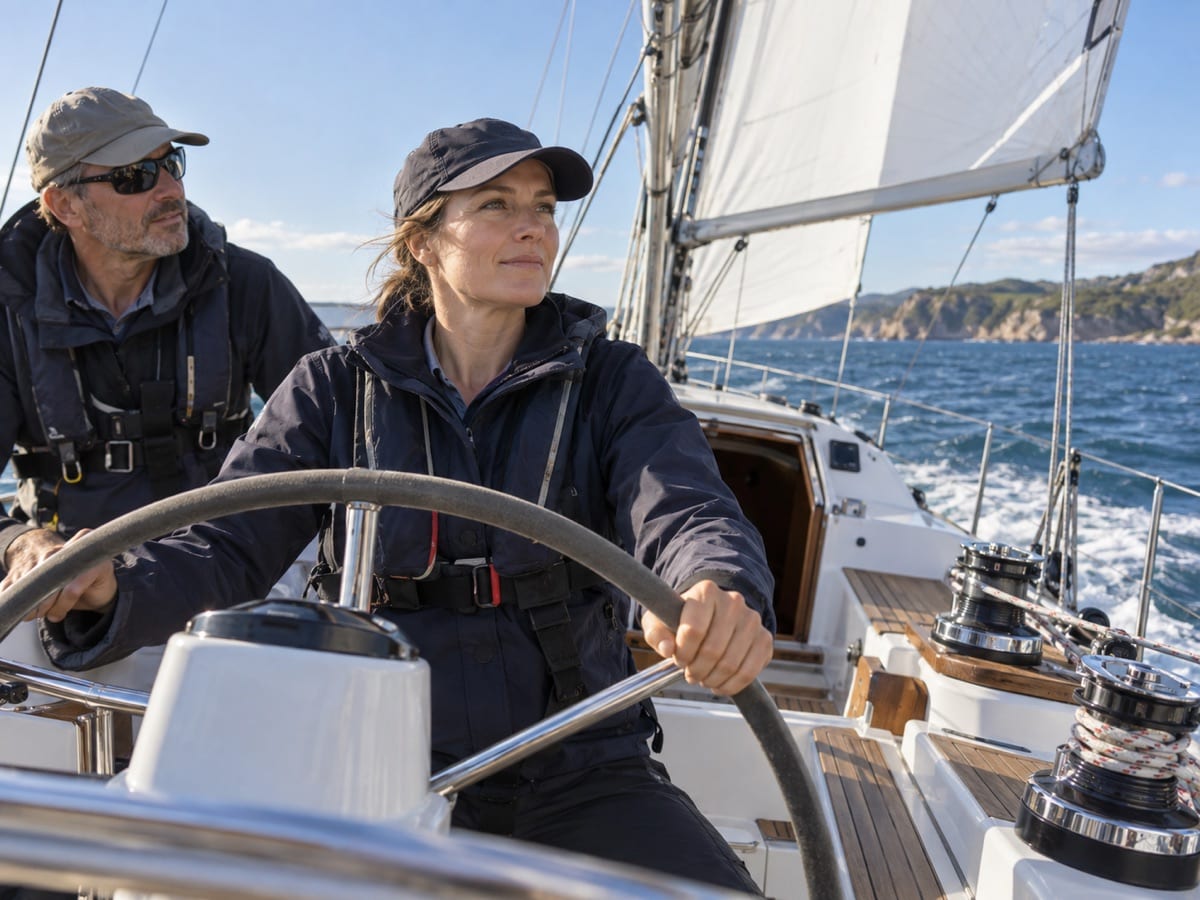
- The goal
- Make ocean and extended coastal passages, as crew or as skipper.
- Assumes you have
- Coastal skipper-level competence, or solid crewing experience.
- How long, honestly
- Years, not months. The theory is a winter; the sea time is several seasons.
- What it is not
- Not a Yachtmaster Ocean shortcut. Sea time cannot be bought as a course, and the qualifying passage is a passage.
Step by step
Be genuinely competent coastally first
Coastal Skipper Practical, or equivalent demonstrated ability. Offshore is coastal sailing with fewer options, not a different skill set.
Do the advanced theory
Coastal Skipper / Yachtmaster Offshore Theory is where passage planning, weather routing and the harder navigation live.
Sea Survival and safety
A liferaft, a flare and an immersion suit are all things you want to have handled before the day you need them. Most offshore races require this course.
Get miles, and get them at night
Night hours, watch systems and heavy weather are the parts that change you. Delivery crewing and offshore races are the two realistic ways to accumulate them.
Sit Yachtmaster Offshore
An examination against a standard, taken after qualifying sea time — not a course you book and pass.
Yachtmaster Ocean if you cross oneoptional
Requires a qualifying ocean passage and celestial navigation. It is the only level that still asks you to find yourself with a sextant.
Every other pathway on this site can be shortened by booking the right course. This one cannot. Offshore competence is mostly sea time, and sea time is the one input no school sells.
What offshore actually adds
- watch systems and sailing while tired
- weather you cannot outrun or shelter from
- sail changes and reefing in the dark
- self-sufficiency for repairs and medical problems
- navigation with degraded or failed electronics
- crew management over days rather than hours
How Australians actually get the miles
Three routes, and most people use more than one:
- offshore club racing — the east-coast Category 1 and 2 races have a standing need for crew
- delivery crewing, moving boats up and down the coast between seasons
- mile-building passages run by schools, which are paid but reliably available
Club racing is the cheapest and the most demanding. Deliveries are the most realistic preparation for cruising, because a delivery is a cruise with a deadline. School passages cost money but do not depend on you knowing anybody, which matters when you are starting.
Safety requirements are set by the race, not the scheme
Australian offshore racing safety requirements — including sea survival training, safety equipment and crew experience minimums — are set by the race organisers under the Australian Sailing Special Regulations, and they change. Check the notice of race for the event you intend to enter rather than assuming a certificate covers it.
Every pathway
I want to charter a yacht
Hire a yacht without a skipper and sail it yourself.
I want to bareboat the Whitsundays
Charter a yacht or catamaran in the Whitsundays and sail it yourself.
I just bought a boat
Sail your own yacht confidently, including short-handed and in a crosswind berth.
We want to sail as a couple
Both of you able to sail the boat, including bringing her home without the other.
I want to race
Race regularly at a club, as crew or on your own boat.
I want to teach sailing
Qualify to teach sailing at a club or a commercial school.
I want to work on boats
Be paid to operate or crew a vessel in Australia.
Not sure this is your pathway?
Three questions — your experience, the boat you want to sail, and your goal — give you a starting course and the schools that teach it near you.