
Home / RYA / RYA Cruising Level 2: Basic Skills
RYA Cruising Level 2: Basic Skills
The follow-on from Level 1, adding real boat handling on a small cruising yacht.
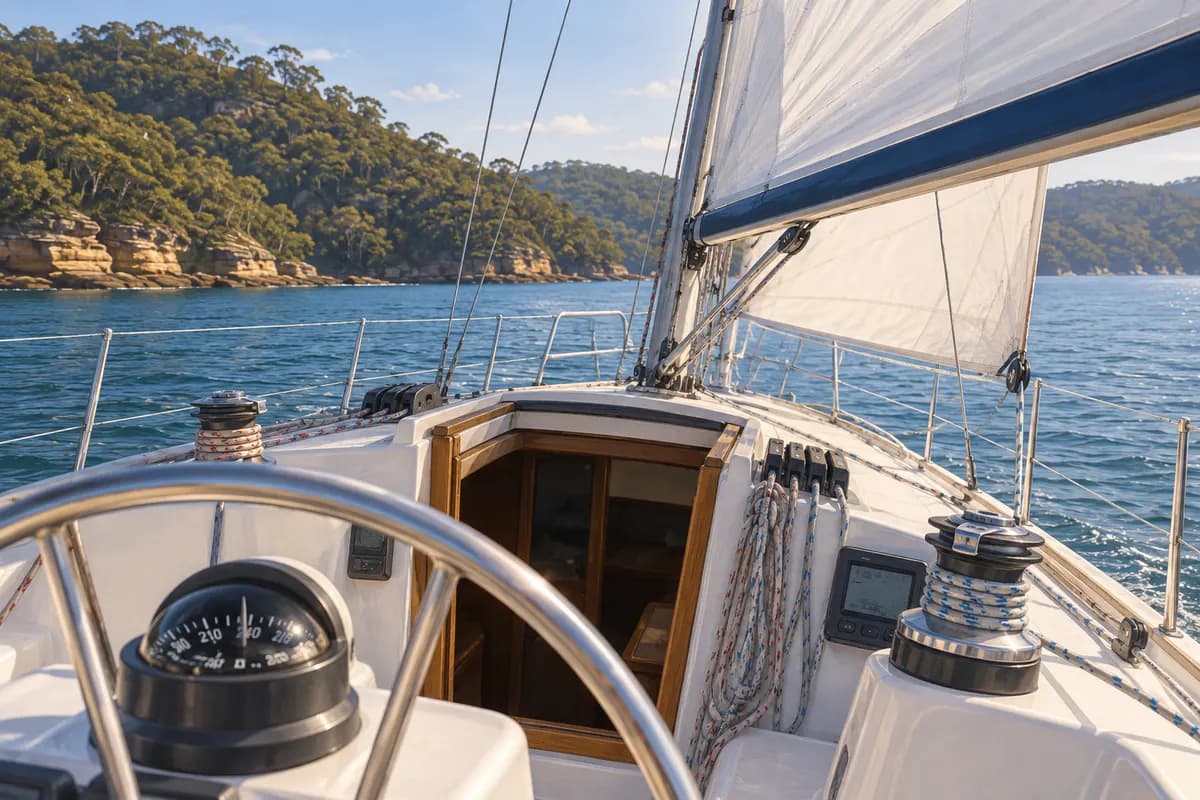
A continuation of introductory cruising training.
It develops greater independence and basic sailing competence before more advanced cruising courses.
Not every Australian RYA school offers Cruising Level 1 and 2, so local availability should be shown dynamically rather than implying national availability.
SailCorp and Oceanwest are examples of Australian RYA centres currently listed for both Cruising Level 1 and Cruising Level 2.
- Who it suits
- People who enjoyed Level 1 and want more time on the helm before deciding on a longer course.
- What it is not
- Still not a skipper course, and not a substitute for Competent Crew if your goal is bigger yachts.
Primary source: RYA training. Course structures and prerequisites can change; confirm the current version with the training body and school.
The course in context
Cruising Level 2 builds confidence with the recurring tasks aboard a sailing yacht. It is useful when the first session no longer feels completely unfamiliar but you still need help joining the individual skills together. The aim is a more capable participant, not independent command of a cruising yacht.
Before you start
Discuss your Level 1 or equivalent experience with the centre. Be specific about what you have done: steering on different wind angles, handling sheets or helping with a departure. Time spent as a passenger is valuable exposure but does not demonstrate the same skills as active crewing.
Skills you will develop
More consistent steering
Develop a better relationship between the course, wind and sail setting. You should start noticing when the yacht needs a small correction rather than waiting for an instruction every time.
Sail-handling routines
Build familiarity with preparation, turns and tidying up afterwards. Understanding the order of a task helps avoid pulling the wrong line at the wrong moment.
Crew awareness
Look beyond your own job to the people and equipment around you. Communication and awareness become particularly important when several learners are sharing a cockpit.
Training and assessment
Ask how the centre reviews progress and whether additional practice sessions are available. Course completion should be discussed in terms of skills demonstrated. It does not remove the need for navigation, planning and further experience before skippering.
Questions to ask the school
- Can my previous experience meet the entry level?
- Will I rotate through different crew roles?
- What is the appropriate next cruising course?
Related learning
Other RYA courses
RYA Sailing Pathway
The whole RYA cruising route in order, and where you are allowed to skip a step.
RYA Cruising Level 1: Start Sailing
A short introduction aboard a small cruising yacht — the shortest way to find out whether yachting suits you.
RYA Start Yachting
Two days aboard a cruising yacht, for complete beginners who want a genuine taste of yachting.
RYA Day Skipper Theory
The classroom half of Day Skipper: charts, tides, buoyage, collision regulations and passage planning.
RYA Day Skipper Practical Sailing
Five days in which you stop being crew and start being the person responsible for the boat.
RYA Coastal Skipper Practical
Skippering beyond familiar water and beyond daylight — longer passages, night pilotage, heavier weather.
RYA Coastal Skipper and Yachtmaster Offshore Theory
The advanced shorebased course: tidal work, passage planning, meteorology and collision regulations at Yachtmaster depth.
RYA Yachtmaster Guide
Not a course. An examination against a published standard, taken after qualifying sea time.
Australian schools using RYA
These schools advertise training under the RYA system. This does not confirm that every school currently runs RYA Cruising Level 2: Basic Skills; check the current course list directly.
Which course should you actually book?
Three questions — your experience, the boat you want to sail, and your goal — give you a starting course and the schools that teach it near you.