
Home / RYA / RYA Basic Skills (Dinghy Level 2)
RYA Basic Skills (Dinghy Level 2)
The level where the instructor gets out of the boat.
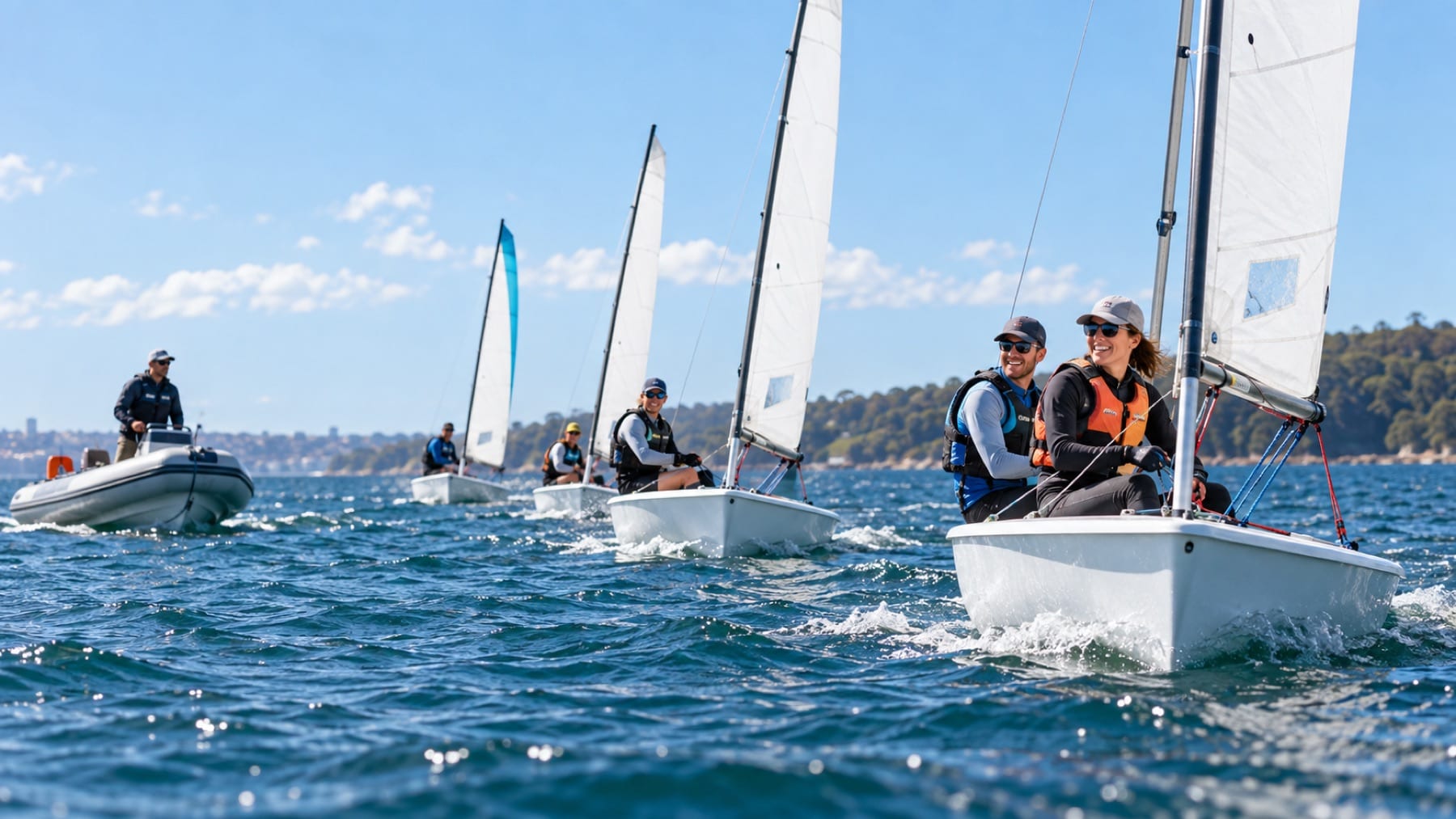
Basic Skills is the point at which a dinghy sailor becomes independent. RYA currently describes it as a two-day course following Start Sailing.
The skills added are the ones that make solo sailing possible:
Capsize recovery
Level 2 is usually where a student capsizes deliberately for the first time and rights the boat themselves. It is the single most useful hour of the course, and the reason Level 2 holders stop being frightened of a gust.
For most sailors Level 2 is the practical end of learning to sail a dinghy. Everything after it is either stronger conditions or a specialism.
- Who it suits
- Level 1 holders, and beginners with some unstructured dinghy experience.
- What it is not
- Not a stronger-wind qualification. Level 2 is assessed in light to moderate conditions.
Primary source: RYA training. Course structures and prerequisites can change; confirm the current version with the training body and school.
The course in context
Level 2 joins the introductory skills into more reliable sailing. Instead of treating each turn as a separate challenge, you begin to choose a course, adjust the sails and return to a starting point with greater independence. Suitable conditions and appropriate support remain important.
Before you start
You should have Level 1 skills or comparable experience. Tell the instructor which manoeuvres still need help, especially if your first course was some time ago. A short refresher can be more useful than repeatedly struggling with a missing foundation.
Skills you will develop
Rigging with understanding
Connect preparation ashore with how the boat will work afloat. Recognise when equipment does not look ready and ask before launching.
Sailing a planned course
Link wind direction, points of sail and turns so you can reach a destination rather than merely keep moving.
Recovery and awareness
Develop the safety and recovery skills appropriate to the dinghy. Being able to respond to a problem is part of basic competence, not an optional extra.
Training and assessment
Practical training builds on Level 1 and includes instructor feedback on the core skills. Confirm the centre’s timetable and what successful completion means for access to its hire or supervised sailing sessions.
Questions to ask the school
- Do my current skills meet the starting level?
- Which recovery exercises are included?
- What practice options follow the course?
Related learning
Other RYA courses
RYA Sailing Pathway
The whole RYA cruising route in order, and where you are allowed to skip a step.
RYA Cruising Level 1: Start Sailing
A short introduction aboard a small cruising yacht — the shortest way to find out whether yachting suits you.
RYA Cruising Level 2: Basic Skills
The follow-on from Level 1, adding real boat handling on a small cruising yacht.
RYA Start Yachting
Two days aboard a cruising yacht, for complete beginners who want a genuine taste of yachting.
RYA Day Skipper Theory
The classroom half of Day Skipper: charts, tides, buoyage, collision regulations and passage planning.
RYA Day Skipper Practical Sailing
Five days in which you stop being crew and start being the person responsible for the boat.
RYA Coastal Skipper Practical
Skippering beyond familiar water and beyond daylight — longer passages, night pilotage, heavier weather.
RYA Coastal Skipper and Yachtmaster Offshore Theory
The advanced shorebased course: tidal work, passage planning, meteorology and collision regulations at Yachtmaster depth.
Australian schools using RYA
These schools advertise training under the RYA system. This does not confirm that every school currently runs RYA Basic Skills (Dinghy Level 2); check the current course list directly.
Which course should you actually book?
Three questions — your experience, the boat you want to sail, and your goal — give you a starting course and the schools that teach it near you.