
Home / RYA / RYA Performance Sailing
RYA Performance Sailing
Trapeze, plane, and get a fast boat back upright without losing the afternoon.
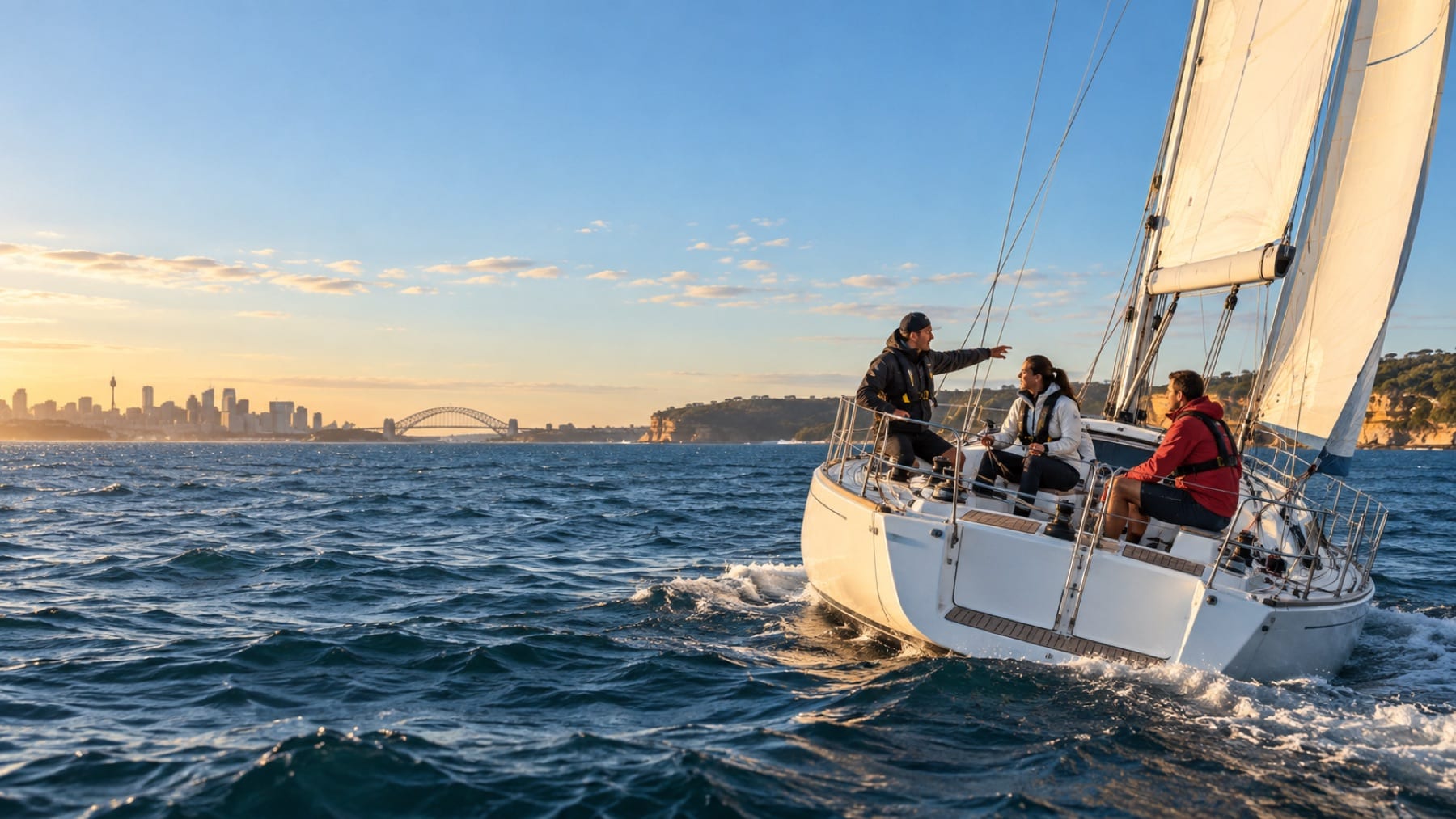
Performance Sailing is the advanced dinghy module aimed at high-performance boats — skiffs, trapeze dinghies and fast asymmetric classes.
Typical content:
Righting technique matters more here than on a training dinghy. A modern skiff will not come up the way a Pico does, and a crew that cannot right its own boat is a crew that gets towed home.
- Who it suits
- Confident dinghy sailors moving into skiffs, high-performance boats or foilers.
- What it is not
- Not a beginner course under an exciting name. It assumes Level 2 handling as a baseline.
Primary source: RYA training. Course structures and prerequisites can change; confirm the current version with the training body and school.
The course in context
Performance Sailing develops the control and coordination needed to get more from a dinghy. It is about purposeful technique: understanding why an adjustment improves handling or speed, then repeating it. It should not be confused with a promise that stronger winds or a faster boat automatically make someone a better sailor.
Before you start
Ask the centre which advanced experience and boat familiarity it expects. Basic steering and turns should not demand all your attention. Describe whether you have used spinnakers, trapezes or more responsive boats rather than assuming every performance course uses them.
Skills you will develop
Efficient trim
Relate sail settings to wind strength, direction and the boat’s response. Useful feedback explains the reason for an adjustment rather than offering a single setting for every situation.
Boat balance
Coordinate crew weight and controls to keep the boat working efficiently. Movements need to fit the particular dinghy and conditions.
Refined manoeuvres
Reduce disruption through turns by preparing and coordinating roles. Review the whole manoeuvre, including its entry and exit, rather than only the moment the boat changes direction.
Training and assessment
Expect coached practical exercises and detailed feedback. Confirm the class of dinghy and the intended conditions; a course on an unfamiliar boat may begin with familiarisation before performance work.
Questions to ask the school
- Which advanced skills are assumed?
- What dinghy will we use?
- How will individual feedback be provided?
Related learning
Other RYA courses
RYA Sailing Pathway
The whole RYA cruising route in order, and where you are allowed to skip a step.
RYA Cruising Level 1: Start Sailing
A short introduction aboard a small cruising yacht — the shortest way to find out whether yachting suits you.
RYA Cruising Level 2: Basic Skills
The follow-on from Level 1, adding real boat handling on a small cruising yacht.
RYA Start Yachting
Two days aboard a cruising yacht, for complete beginners who want a genuine taste of yachting.
RYA Day Skipper Theory
The classroom half of Day Skipper: charts, tides, buoyage, collision regulations and passage planning.
RYA Day Skipper Practical Sailing
Five days in which you stop being crew and start being the person responsible for the boat.
RYA Coastal Skipper Practical
Skippering beyond familiar water and beyond daylight — longer passages, night pilotage, heavier weather.
RYA Coastal Skipper and Yachtmaster Offshore Theory
The advanced shorebased course: tidal work, passage planning, meteorology and collision regulations at Yachtmaster depth.
Australian schools using RYA
These schools advertise training under the RYA system. This does not confirm that every school currently runs RYA Performance Sailing; check the current course list directly.
Which course should you actually book?
Three questions — your experience, the boat you want to sail, and your goal — give you a starting course and the schools that teach it near you.