
Home / American Sailing / ASA 101: Keelboat 1
ASA 101: Keelboat 1
American Sailing’s entry certification, on a small keelboat in moderate conditions.
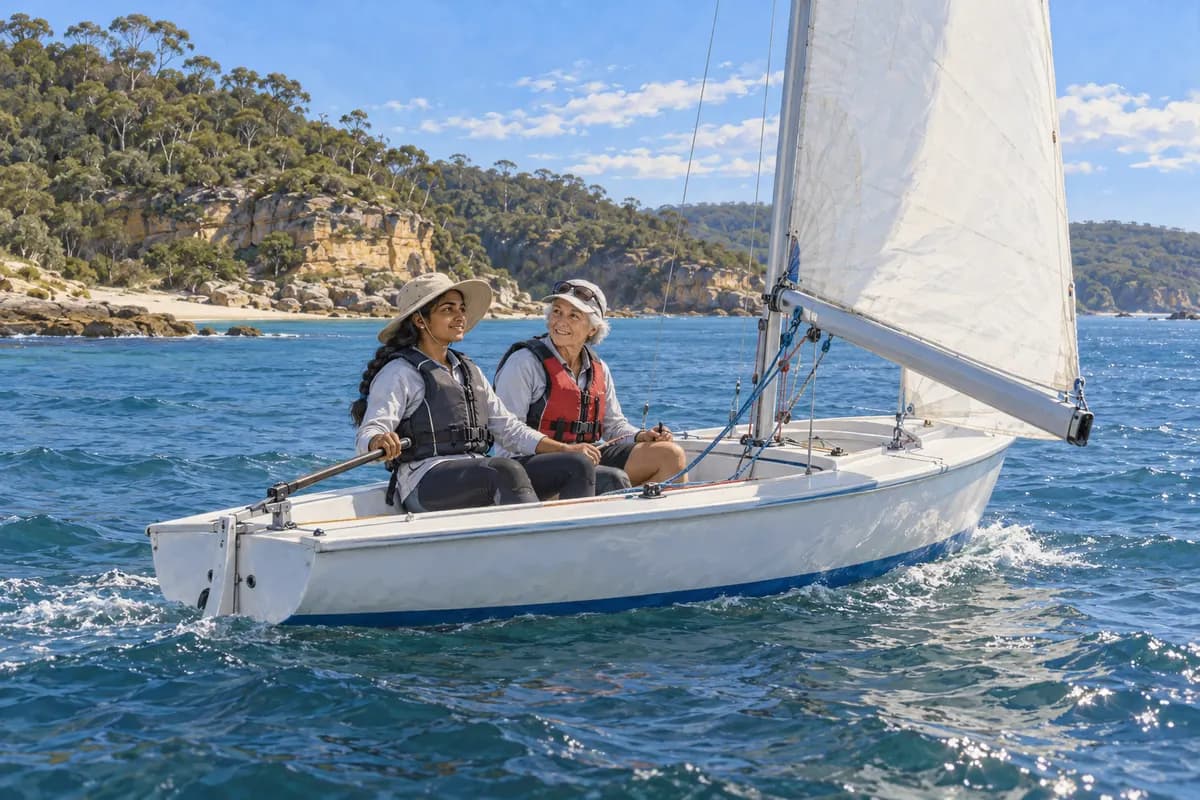
An introductory keelboat sailing qualification.
Typical students are complete beginners or sailors seeking formal recognition of basic keelboat skills.
- Who it suits
- Beginners starting in the ASA scheme, or sailors with existing ASA certificates.
- What it is not
- Availability in Australia is limited — check a school teaches it before planning around it.
Primary source: American Sailing certifications. Course structures and prerequisites can change; confirm the current version with the training body and school.
The course in context
This is the starting point for learning to sail a keelboat, rather than an introduction to operating a large liveaboard yacht. The useful outcome is understanding how steering, sail angle and wind direction work together. You should be an active participant: taking the helm, handling lines and learning how to communicate during a manoeuvre.
Before you start
ASA 101 is an entry-level certification. Tell the school about any previous dinghy or yacht experience, but do not feel you need to learn everything beforehand. Ask about the boat used, boarding arrangements and the physical tasks involved if you have accessibility needs or concerns about balance.
Skills you will develop
Sailing vocabulary in context
Connect names such as sheet, halyard, tack and gybe with the equipment or action aboard. Knowing the words helps you respond to an instructor without confusing a rope with a sail or a direction.
Helming and sail handling
Develop basic control on different points of sail, including turning through and away from the wind. Aim to understand why a sail fills or flaps, rather than memorising one position for the sheet.
Seamanship and safety
Learn lookout habits, crew communication and the basic recovery skills in the standard. Safe line handling matters just as much as making the boat go quickly.
Training and assessment
Expect practical sailing supported by theory and knowledge checks. American Sailing assesses knowledge and demonstrated skills; attending a course is not an automatic pass. The school sets its timetable, so ask how much sailing each student receives and how weather interruptions are handled.
Questions to ask the school
- Will I practise both helming and trimming?
- What size keelboat will we use?
- How can I sail regularly after the course?
Related learning
Other American Sailing courses
ASA 102: Keelboat 2
Develop more precise sail trim, boat balance and small-keelboat handling.
ASA 103: Coastal Cruising
The first cruising-boat certification: auxiliary power, day passages, moderate conditions.
ASA 104: Bareboat Cruising
Cruising skills for multi-day bareboat sailing; charter acceptance depends on the operator.
ASA 105: Coastal Navigation
The shorebased navigation certification: charts, plotting, tides, passage planning.
ASA 106: Advanced Coastal Cruising
Plan and lead extended coastal passages by day and night, with stronger navigation, watchkeeping and crew-management skills.
ASA 107: Celestial Navigation
Sextant work: sight taking, sight reduction, fixing a position without electronics.
ASA 108: Offshore Passagemaking
The top of the ASA cruising pathway: extended offshore passages and real self-sufficiency.
ASA 110: Basic Small Boat Sailing
The small-boat entry point, below the keelboat pathway.
Which course should you actually book?
Three questions — your experience, the boat you want to sail, and your goal — give you a starting course and the schools that teach it near you.