
Home / American Sailing / ASA 104: Bareboat Cruising
ASA 104: Bareboat Cruising
Cruising skills for multi-day bareboat sailing; charter acceptance depends on the operator.
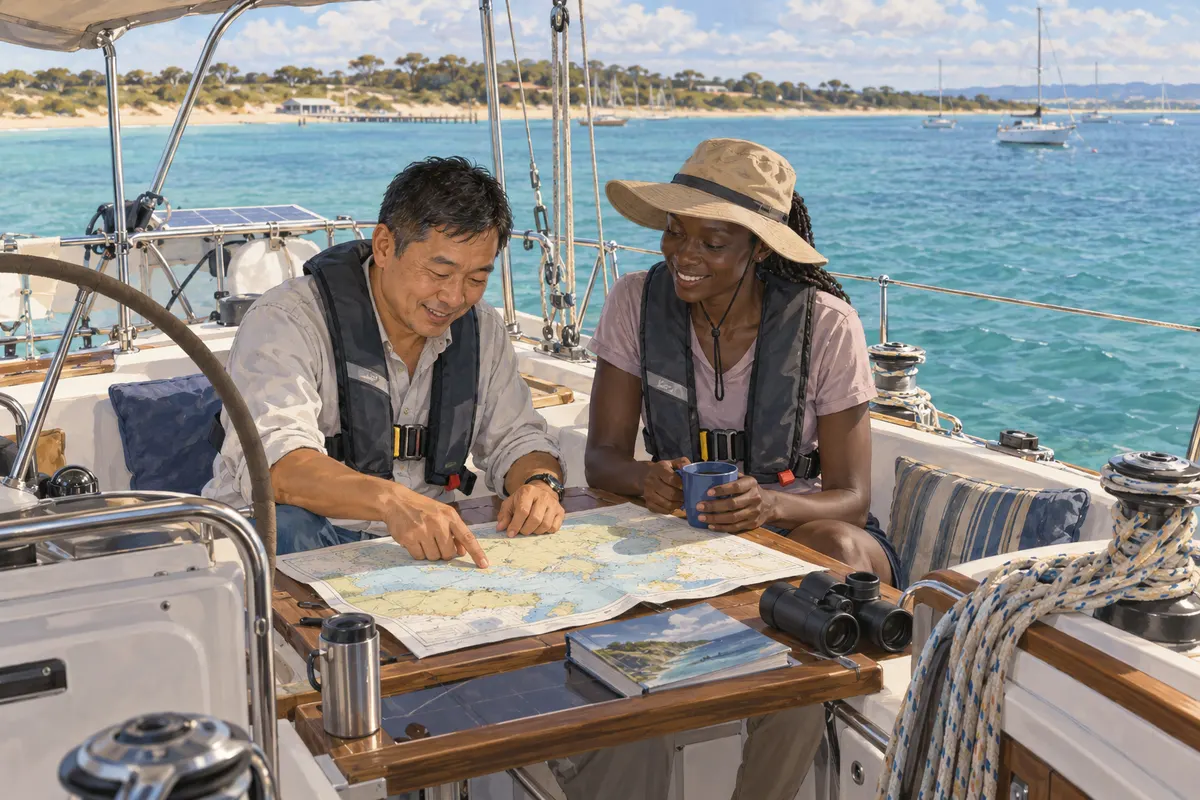
Bareboat Cruising prepares sailors for multi-day cruising and yacht charter.
Training can include:
- Who it suits
- Sailors chartering in North America, or holders of earlier ASA certificates.
- What it is not
- Australian availability is very limited. Do not build a charter plan around sitting it here.
Primary source: American Sailing certifications. Course structures and prerequisites can change; confirm the current version with the training body and school.
The course in context
Bareboat Cruising brings sailing and living aboard together. The challenge is not just completing a manoeuvre; it is keeping a cruise organised across consecutive days. A good candidate can contribute to route choices, look after the boat and explain the plan to people who may have very different levels of experience.
Before you start
American Sailing lists ASA 101 and ASA 103 as prerequisites. Ask the school to review your recent experience before a combined or accelerated programme. If docking or basic sail handling still needs constant prompting, targeted practice may make the cruising course much more productive.
Skills you will develop
Preparing a cruise
Consider the route, forecast, crew needs and provisions together. A convenient destination is not a complete plan if arrival timing, water or fuel have been overlooked.
Living with yacht systems
Learn how the boat’s everyday systems support a cruise and what checks are expected. Handover familiarity matters because two similar-looking charter yachts can have different controls and layouts.
Sharing command responsibilities
Bring navigation, anchoring and crew management into the same exercise. The skipper needs a workable plan and a way to notice when that plan needs changing.
Training and assessment
ASA 104 is a practical cruising certification with knowledge and skills assessment. Schools may package it into liveaboard training, but the number of calendar days and the balance of sailing versus classroom time must be checked with the provider. Ask how individual competence is assessed within the group.
Questions to ask the school
- How much time will each person spend making skipper decisions?
- Which boat systems are covered?
- Will my intended charter operator accept this certificate and my experience?
Related learning
Before and after
Other American Sailing courses
ASA 101: Keelboat 1
American Sailing’s entry certification, on a small keelboat in moderate conditions.
ASA 102: Keelboat 2
Develop more precise sail trim, boat balance and small-keelboat handling.
ASA 103: Coastal Cruising
The first cruising-boat certification: auxiliary power, day passages, moderate conditions.
ASA 105: Coastal Navigation
The shorebased navigation certification: charts, plotting, tides, passage planning.
ASA 106: Advanced Coastal Cruising
Plan and lead extended coastal passages by day and night, with stronger navigation, watchkeeping and crew-management skills.
ASA 107: Celestial Navigation
Sextant work: sight taking, sight reduction, fixing a position without electronics.
ASA 108: Offshore Passagemaking
The top of the ASA cruising pathway: extended offshore passages and real self-sufficiency.
ASA 110: Basic Small Boat Sailing
The small-boat entry point, below the keelboat pathway.
Which course should you actually book?
Three questions — your experience, the boat you want to sail, and your goal — give you a starting course and the schools that teach it near you.