
Home / American Sailing / ASA 103: Coastal Cruising
ASA 103: Coastal Cruising
The first cruising-boat certification: auxiliary power, day passages, moderate conditions.
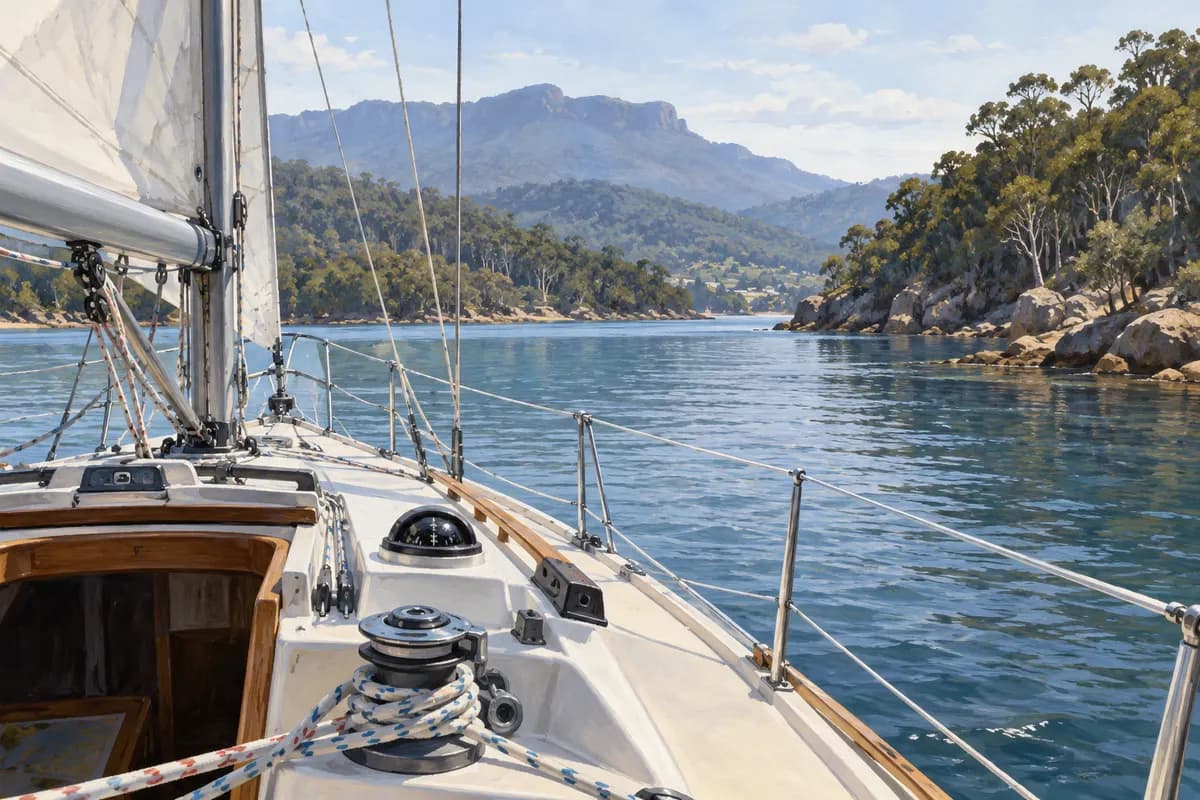
Moves the sailor toward handling larger cruising yachts in coastal waters.
Typical development includes:
- Who it suits
- ASA 101 holders moving up to boats with an engine and a cabin.
- What it is not
- Not a bareboat qualification on its own — that is ASA 104.
Primary source: American Sailing certifications. Course structures and prerequisites can change; confirm the current version with the training body and school.
The course in context
Coastal Cruising introduces the additional responsibilities that come with an auxiliary-powered cruising yacht. You are no longer thinking only about sailing around a course: the engine, anchor, destination and crew all become part of the outing. This makes it an important bridge between small-keelboat sailing and multi-day bareboat cruising.
Before you start
ASA 101 is the published prerequisite. Bring an honest account of your recent sailing, especially if there has been a long gap since your last course. A certificate shows what you demonstrated at the time; it does not tell the instructor which skills feel natural today.
Skills you will develop
Handling under power
Understand how powered manoeuvring fits into leaving and returning to a berth. The learning priority is controlled movement and clear crew roles, not relying on speed or someone jumping ashore.
Anchoring and coastal routines
Connect seamanship tasks with the choice of a suitable stopping place. Discuss the boat’s equipment and the checks that should happen before the crew settles into the next activity.
Navigation and skipper awareness
Develop the habit of knowing where the boat is going, what could interrupt the plan and what information the crew needs. The standard concerns daytime coastal cruising in moderate conditions.
Training and assessment
Training is practical, with supporting knowledge work and assessment. Ask whether the course is delivered as day sessions or a liveaboard programme and whether it is sold alone or alongside ASA 104. A combined booking still needs to teach and assess the separate standards.
Questions to ask the school
- Will we practise engine handling and anchoring?
- Is accommodation aboard part of the programme?
- What experience should I gain before ASA 104?
Related learning
Other American Sailing courses
ASA 101: Keelboat 1
American Sailing’s entry certification, on a small keelboat in moderate conditions.
ASA 102: Keelboat 2
Develop more precise sail trim, boat balance and small-keelboat handling.
ASA 104: Bareboat Cruising
Cruising skills for multi-day bareboat sailing; charter acceptance depends on the operator.
ASA 105: Coastal Navigation
The shorebased navigation certification: charts, plotting, tides, passage planning.
ASA 106: Advanced Coastal Cruising
Plan and lead extended coastal passages by day and night, with stronger navigation, watchkeeping and crew-management skills.
ASA 107: Celestial Navigation
Sextant work: sight taking, sight reduction, fixing a position without electronics.
ASA 108: Offshore Passagemaking
The top of the ASA cruising pathway: extended offshore passages and real self-sufficiency.
ASA 110: Basic Small Boat Sailing
The small-boat entry point, below the keelboat pathway.
Which course should you actually book?
Three questions — your experience, the boat you want to sail, and your goal — give you a starting course and the schools that teach it near you.