
Home / American Sailing / ASA 107: Celestial Navigation
ASA 107: Celestial Navigation
Sextant work: sight taking, sight reduction, fixing a position without electronics.
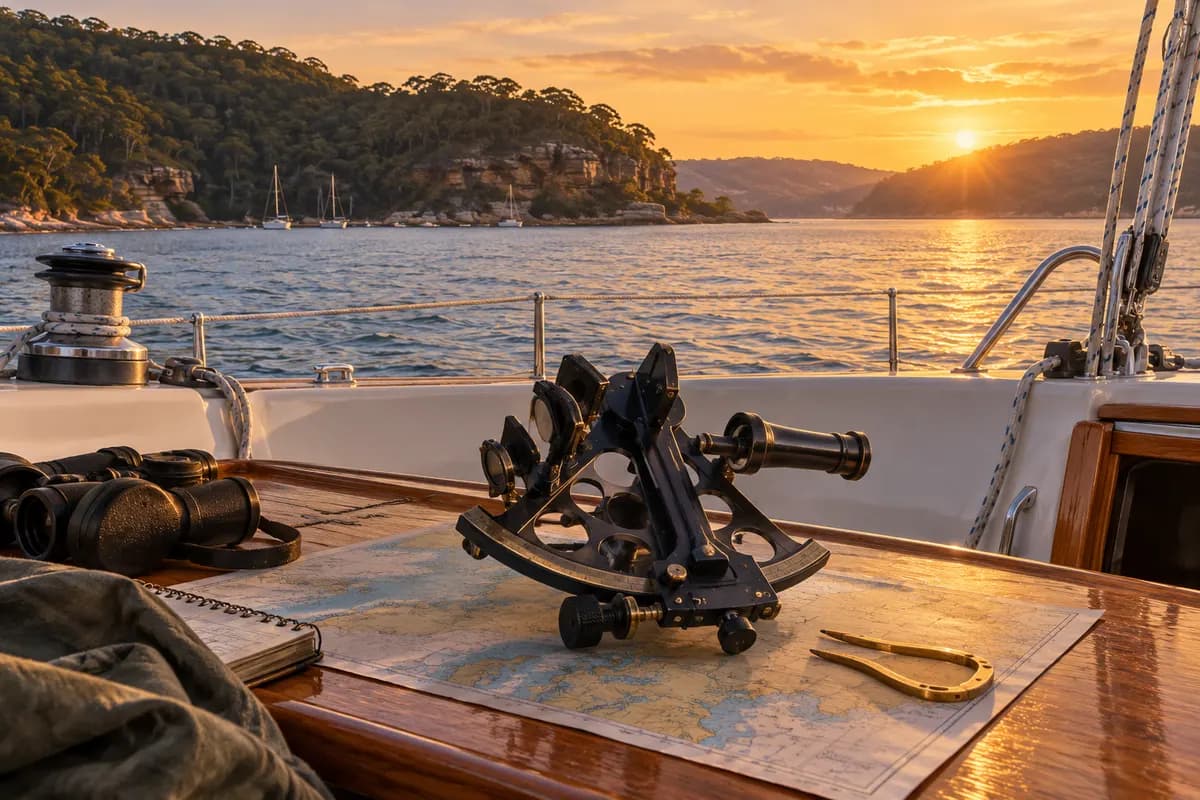
Develops celestial-navigation knowledge for offshore sailors.
- Who it suits
- Ocean passage planners, and anyone who wants a genuine backup to satellite navigation.
- What it is not
- Shorebased. It is not the ocean passage itself.
Primary source: American Sailing certifications. Course structures and prerequisites can change; confirm the current version with the training body and school.
The course in context
Celestial Navigation is about deriving a position from observations of celestial bodies and accurate time. It suits sailors who enjoy understanding how a fix is constructed rather than receiving one from an electronic display. It is a specialist navigation subject, not a substitute for learning coastal pilotage or running a yacht.
Before you start
Check the current navigation prerequisites with the school and American Sailing before enrolling. You will benefit from confidence with position, time, plotting and careful numerical work. Ask whether the course expects access to a sextant and whether observation practice is included or the emphasis is on supplied sight data.
Skills you will develop
Measurement and corrections
Understand why a sextant observation needs correction before it becomes useful navigation information. Keeping a clear record of the observation is part of the method, not an optional extra.
Time and celestial data
Work with the relationship between a timed observation and reference information. Small transcription errors can undermine otherwise careful work, so a repeatable recording process is valuable.
Plotting and interpretation
Turn the calculations into lines of position and consider how they support a fix. Distinguish understanding the mathematics from taking reliable sights on a moving vessel.
Training and assessment
Expect detailed study, worked exercises and a knowledge assessment. Delivery may be classroom-based or remote depending on the provider. Ask how feedback is given on calculations and whether practical sight-taking is demonstrated. Completing a navigation course does not by itself demonstrate offshore command.
Questions to ask the school
- Is a sextant supplied for practice?
- Are live observations included?
- How does this relate to ASA 117 and my proposed ASA 108 pathway?
Related learning
Other American Sailing courses
ASA 101: Keelboat 1
American Sailing’s entry certification, on a small keelboat in moderate conditions.
ASA 102: Keelboat 2
Develop more precise sail trim, boat balance and small-keelboat handling.
ASA 103: Coastal Cruising
The first cruising-boat certification: auxiliary power, day passages, moderate conditions.
ASA 104: Bareboat Cruising
Cruising skills for multi-day bareboat sailing; charter acceptance depends on the operator.
ASA 105: Coastal Navigation
The shorebased navigation certification: charts, plotting, tides, passage planning.
ASA 106: Advanced Coastal Cruising
Plan and lead extended coastal passages by day and night, with stronger navigation, watchkeeping and crew-management skills.
ASA 108: Offshore Passagemaking
The top of the ASA cruising pathway: extended offshore passages and real self-sufficiency.
ASA 110: Basic Small Boat Sailing
The small-boat entry point, below the keelboat pathway.
Which course should you actually book?
Three questions — your experience, the boat you want to sail, and your goal — give you a starting course and the schools that teach it near you.