
Home / American Sailing / ASA 106: Advanced Coastal Cruising
ASA 106: Advanced Coastal Cruising
Plan and lead extended coastal passages by day and night, with stronger navigation, watchkeeping and crew-management skills.
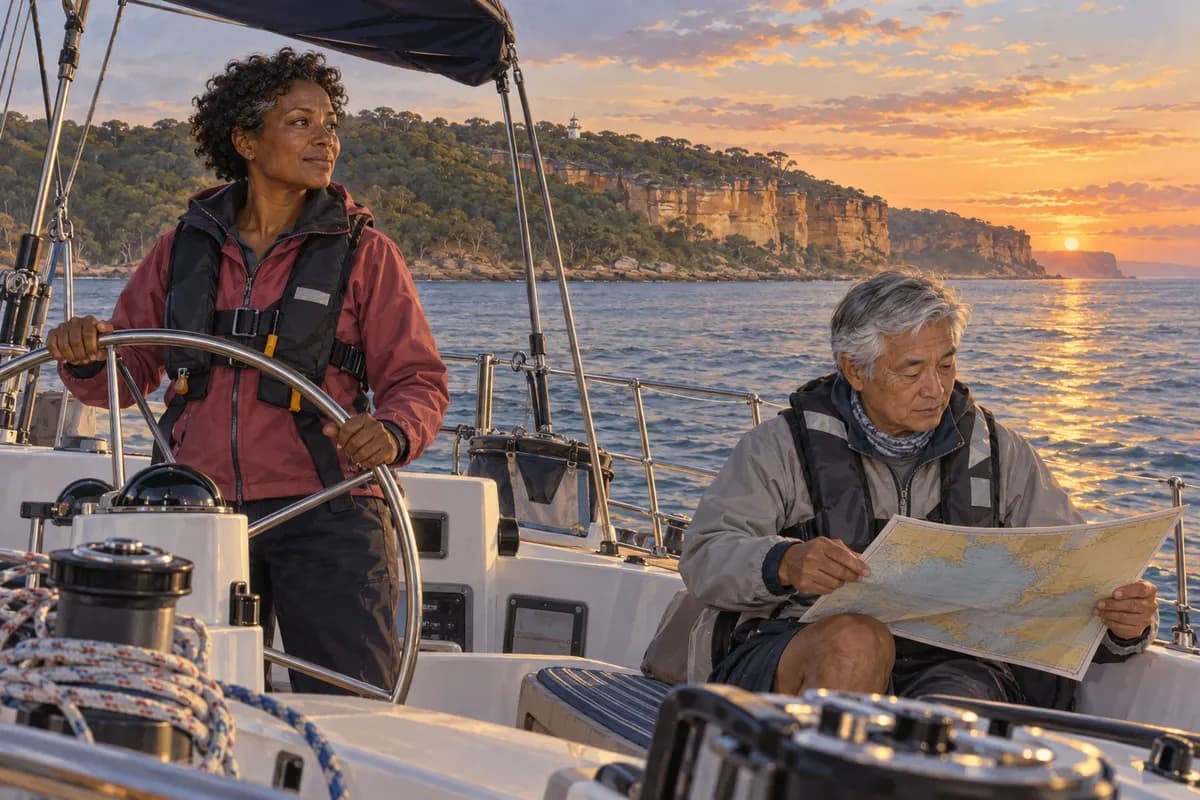
ASA 106 moves beyond basic bareboat cruising into sustained passage leadership on a 30–50-foot sailing yacht. The standard includes at least 48 hours underway, with a continuous passage of at least 24 hours, bringing night navigation, watchkeeping and fatigue management into the practical learning.
Read the detailed guide below for prerequisites, skills, assessment and preparation. Confirm current course availability and delivery arrangements directly with an American Sailing school.
- Who it suits
- Sailors with ASA 101, 103, 104 and 105 preparing for more demanding coastal cruising.
- What it is not
- Not unlimited offshore competence, a commercial licence or a guarantee of charter acceptance.
Primary source: American Sailing certifications. Course structures and prerequisites can change; confirm the current version with the training body and school.
The course in context
ASA 106 is for sailors who want to move beyond familiar daytime cruising and take more responsibility on extended coastal passages. The important change is sustained decision-making: the boat continues moving while the crew rotates, the light changes and the forecast develops. Navigation, seamanship and leadership have to work together rather than being separate exercises.
Before you start
The published prerequisites are ASA 101, ASA 103, ASA 104 and ASA 105. Holding ASA 104 alone is not the complete entry pathway. Before booking, send the school your certificates and a summary of recent passages, night hours and time in charge. Ask it to identify any refresher work rather than assuming an earlier pass means every skill is current.
Skills you will develop
Extended passage planning
The standard includes weather interpretation, coastal navigation, boat checks and planning fuel, water and provisions. Think of these as connected decisions: a slower passage changes arrival time, crew fatigue and the resources needed aboard.
Night sailing and watchkeeping
Training addresses operating after dark, watch organisation and maintaining awareness. Ask how the school rotates responsibilities so you get meaningful navigation and helming experience rather than spending the passage watching someone else work.
Sail handling and changing conditions
Advanced trim, reefing and heavy-weather preparation form part of the syllabus. The goal is sound judgement about conditions and the boat’s limits, not a belief that a qualification makes every forecast acceptable.
Managing problems aboard
Emergency response, recovery exercises and systems troubleshooting connect boat handling with crew leadership. A useful debrief asks what warning signs were available and how the crew communicated, not simply whether the exercise was completed.
Training and assessment
The official standard specifies at least 48 hours underway on a liveaboard coastal passage, including one continuous period of at least 24 hours. It describes a sailing vessel of approximately 30–50 feet and includes day and night work. These are training-standard requirements, not the total calendar length of every school’s programme. American Sailing requires demonstrated practical skills and a written assessment; attendance alone does not guarantee certification.
Questions to ask the school
- How does the itinerary meet the required underway and continuous-passage time?
- Will every student take a navigation watch and practise skipper responsibilities?
- What happens if weather prevents the planned passage or assessment?
- What pre-course reading, logbook evidence and ASA 105 revision do you expect?
- Which safety equipment and overnight clothing should I bring, and what is supplied?
Related learning
Other American Sailing courses
ASA 101: Keelboat 1
American Sailing’s entry certification, on a small keelboat in moderate conditions.
ASA 102: Keelboat 2
Develop more precise sail trim, boat balance and small-keelboat handling.
ASA 103: Coastal Cruising
The first cruising-boat certification: auxiliary power, day passages, moderate conditions.
ASA 104: Bareboat Cruising
Cruising skills for multi-day bareboat sailing; charter acceptance depends on the operator.
ASA 105: Coastal Navigation
The shorebased navigation certification: charts, plotting, tides, passage planning.
ASA 107: Celestial Navigation
Sextant work: sight taking, sight reduction, fixing a position without electronics.
ASA 108: Offshore Passagemaking
The top of the ASA cruising pathway: extended offshore passages and real self-sufficiency.
ASA 110: Basic Small Boat Sailing
The small-boat entry point, below the keelboat pathway.
Which course should you actually book?
Three questions — your experience, the boat you want to sail, and your goal — give you a starting course and the schools that teach it near you.