
Home / American Sailing / ASA 110: Basic Small Boat Sailing
ASA 110: Basic Small Boat Sailing
The small-boat entry point, below the keelboat pathway.
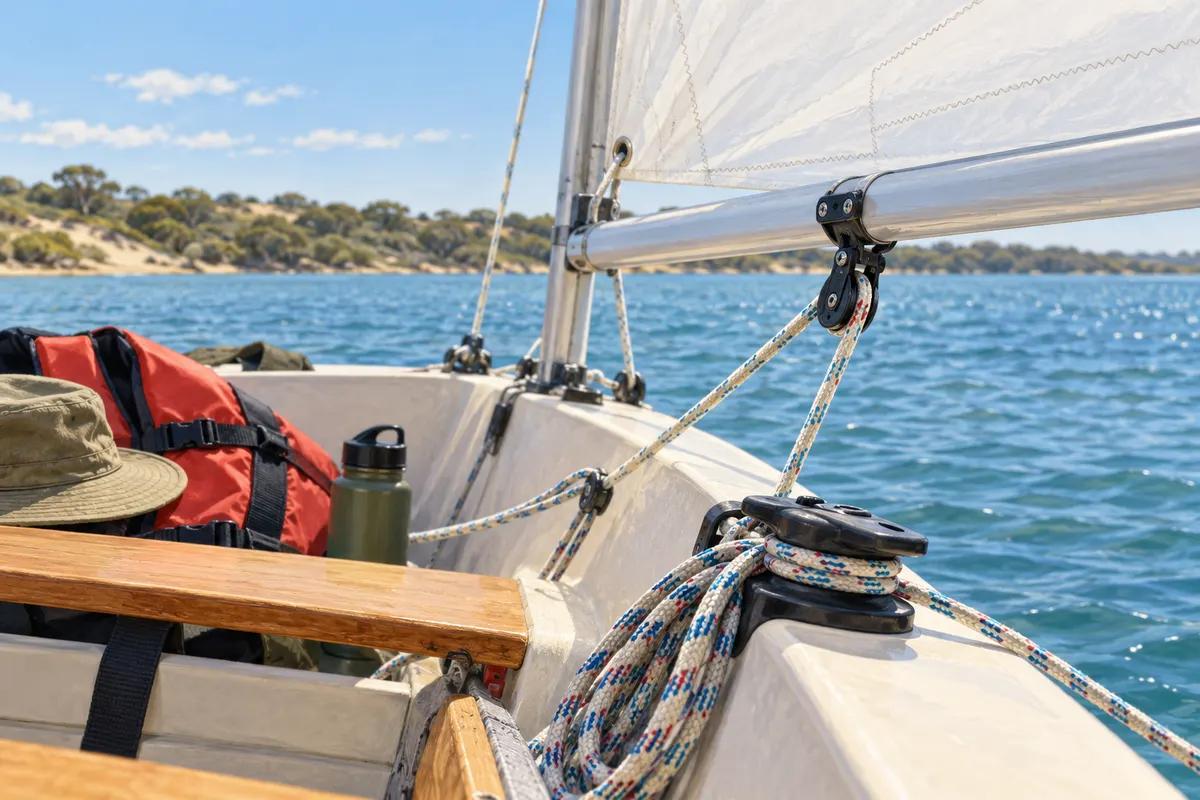
Small-boat sailing rather than the cruising-yacht pathway.
- Who it suits
- People who want to start in a dinghy within the ASA scheme.
- What it is not
- Not a prerequisite for ASA 101 — you can start on a keelboat.
Primary source: American Sailing certifications. Course structures and prerequisites can change; confirm the current version with the training body and school.
The course in context
Small Boat Sailing offers a direct, responsive introduction to sailing. With less equipment between you and the boat’s movement, changes in balance, steering and sail trim are easy to notice. Choose it because you want to learn on a small boat, not because its course number sounds more advanced than the keelboat sequence.
Before you start
This is an introductory small-boat route. Ask about the exact training craft, whether you sail alone or with another student, and the school’s water-confidence expectations. Clothing and capsize arrangements are important questions for a small-boat session and should be explained before arrival.
Skills you will develop
Boat preparation
Get familiar with the equipment and the sequence of preparing a small sailing boat. The learning task includes recognising when something is not ready before launching.
Steering, trim and balance
Notice how your movements affect the boat as well as how the sails respond to wind. Small-boat learning rewards gentle, coordinated changes rather than large corrections.
Returning and recovering
Discuss the school’s launching, landing and recovery exercises. Ask how its safety cover supports beginners while still allowing them to become active sailors.
Training and assessment
Expect practical sessions with short explanations and demonstrations. Verify the school’s current ASA 110 syllabus and assessment arrangements rather than assuming it uses the same boat or programme as ASA 101. Weather and water temperature can strongly affect the experience.
Questions to ask the school
- What boat will I sail and how many people share it?
- How is capsize practice introduced?
- What supervised sailing is available afterwards?
Related learning
Before and after
Other American Sailing courses
ASA 101: Keelboat 1
American Sailing’s entry certification, on a small keelboat in moderate conditions.
ASA 102: Keelboat 2
Develop more precise sail trim, boat balance and small-keelboat handling.
ASA 103: Coastal Cruising
The first cruising-boat certification: auxiliary power, day passages, moderate conditions.
ASA 104: Bareboat Cruising
Cruising skills for multi-day bareboat sailing; charter acceptance depends on the operator.
ASA 105: Coastal Navigation
The shorebased navigation certification: charts, plotting, tides, passage planning.
ASA 106: Advanced Coastal Cruising
Plan and lead extended coastal passages by day and night, with stronger navigation, watchkeeping and crew-management skills.
ASA 107: Celestial Navigation
Sextant work: sight taking, sight reduction, fixing a position without electronics.
ASA 108: Offshore Passagemaking
The top of the ASA cruising pathway: extended offshore passages and real self-sufficiency.
Which course should you actually book?
Three questions — your experience, the boat you want to sail, and your goal — give you a starting course and the schools that teach it near you.