
Home / RYA / RYA Keelboat Start Sailing
RYA Keelboat Start Sailing
Learning to sail in a boat with a keel, which changes the experience more than beginners expect.
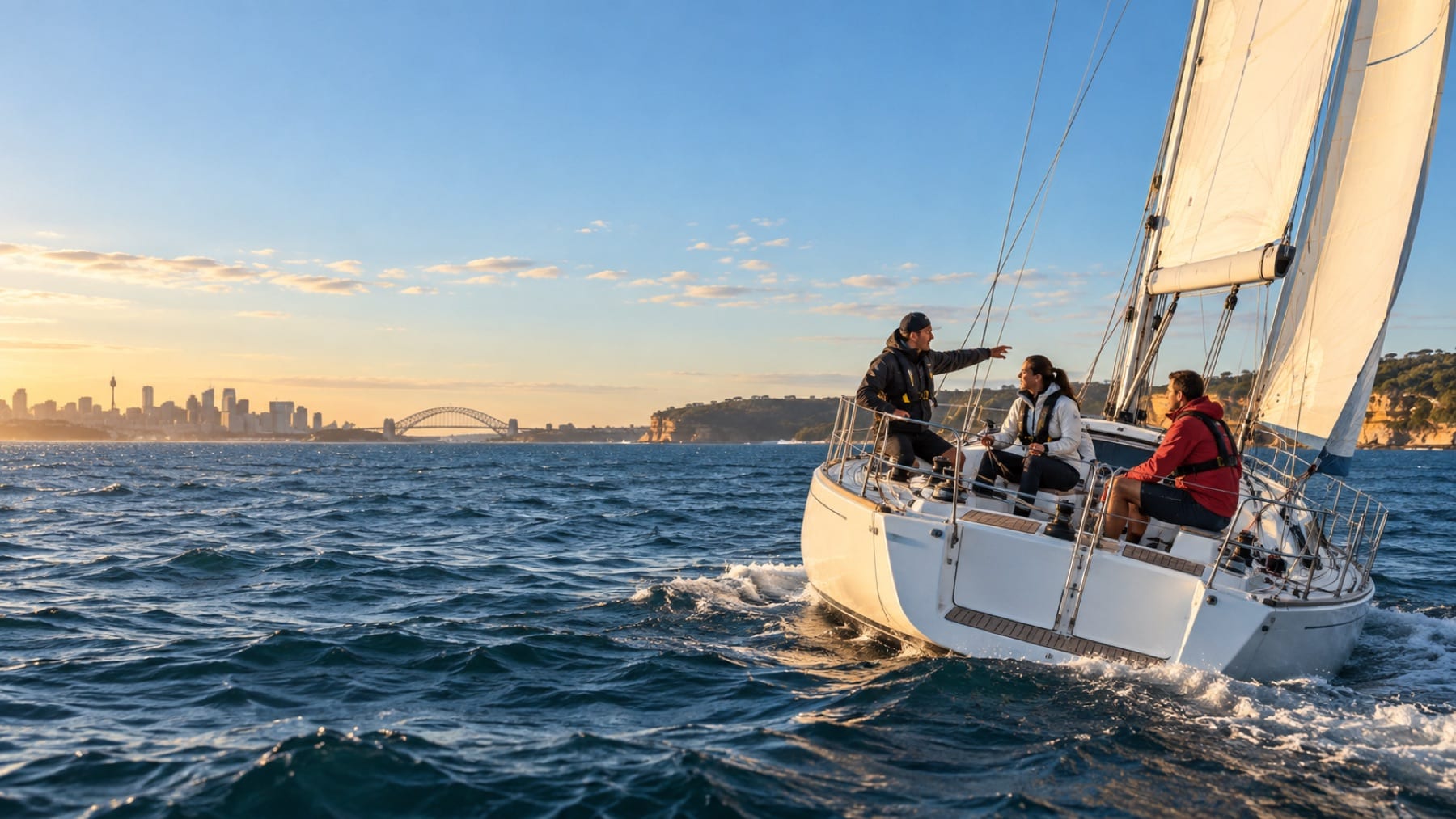
The RYA Keelboat Scheme runs in parallel with the dinghy scheme, on small ballasted boats that are stable and do not capsize in normal use.
Start Sailing covers:
Keelboat or dinghy?
A keelboat is more forgiving and more comfortable, and rewards trim rather than punishing mistakes with a capsize. A dinghy teaches balance faster precisely because it does punish them. Neither is better; they suit different people.
- Who it suits
- Beginners who want dinghy-style sailing without the swim, and anyone heading for yachts.
- What it is not
- Not a yacht qualification. Keelboats are small day boats, not cruising yachts with a cabin.
Primary source: RYA training. Course structures and prerequisites can change; confirm the current version with the training body and school.
The course in context
Small-keelboat introductory sailing teaches the fundamentals on a boat with a ballasted keel. The focus is hands-on sailing and crew coordination, usually without the accommodation and passage systems of a cruising yacht. It can suit beginners who want a responsive boat with a different feel from a dinghy.
Before you start
Ask about the exact boat, seating, boarding and physical tasks. “Keelboat” covers a range of layouts, so do not assume every boat is equally accessible or sheltered. No previous experience is expected for introductory training.
Skills you will develop
Wind and steering
Learn how course and sail angle work together. Taking the helm helps make the relationship tangible rather than purely theoretical.
Working the sails
Identify the controls and participate in straightforward sail handling. Small crews give useful opportunities to see how each task affects the boat.
Crew routines
Practise communication during turns and preparation. Knowing who does what helps avoid confusion in a compact cockpit.
Training and assessment
Confirm the named RYA level and the centre’s schedule. Small-keelboat training is not automatically equivalent to a cruising-yacht skipper course, even when both boats have keels.
Questions to ask the school
- What type of keelboat is used?
- How many people share the helm?
- Does this lead into small-keelboat or cruising training?
Related learning
Other RYA courses
RYA Sailing Pathway
The whole RYA cruising route in order, and where you are allowed to skip a step.
RYA Cruising Level 1: Start Sailing
A short introduction aboard a small cruising yacht — the shortest way to find out whether yachting suits you.
RYA Cruising Level 2: Basic Skills
The follow-on from Level 1, adding real boat handling on a small cruising yacht.
RYA Start Yachting
Two days aboard a cruising yacht, for complete beginners who want a genuine taste of yachting.
RYA Day Skipper Theory
The classroom half of Day Skipper: charts, tides, buoyage, collision regulations and passage planning.
RYA Day Skipper Practical Sailing
Five days in which you stop being crew and start being the person responsible for the boat.
RYA Coastal Skipper Practical
Skippering beyond familiar water and beyond daylight — longer passages, night pilotage, heavier weather.
RYA Coastal Skipper and Yachtmaster Offshore Theory
The advanced shorebased course: tidal work, passage planning, meteorology and collision regulations at Yachtmaster depth.
Australian schools using RYA
These schools advertise training under the RYA system. This does not confirm that every school currently runs RYA Keelboat Start Sailing; check the current course list directly.
Which course should you actually book?
Three questions — your experience, the boat you want to sail, and your goal — give you a starting course and the schools that teach it near you.