
Home / American Sailing / ASA 114: Cruising Catamaran
ASA 114: Cruising Catamaran
The ASA multihull certification: twin engines, wide beam, no heeling to warn you.
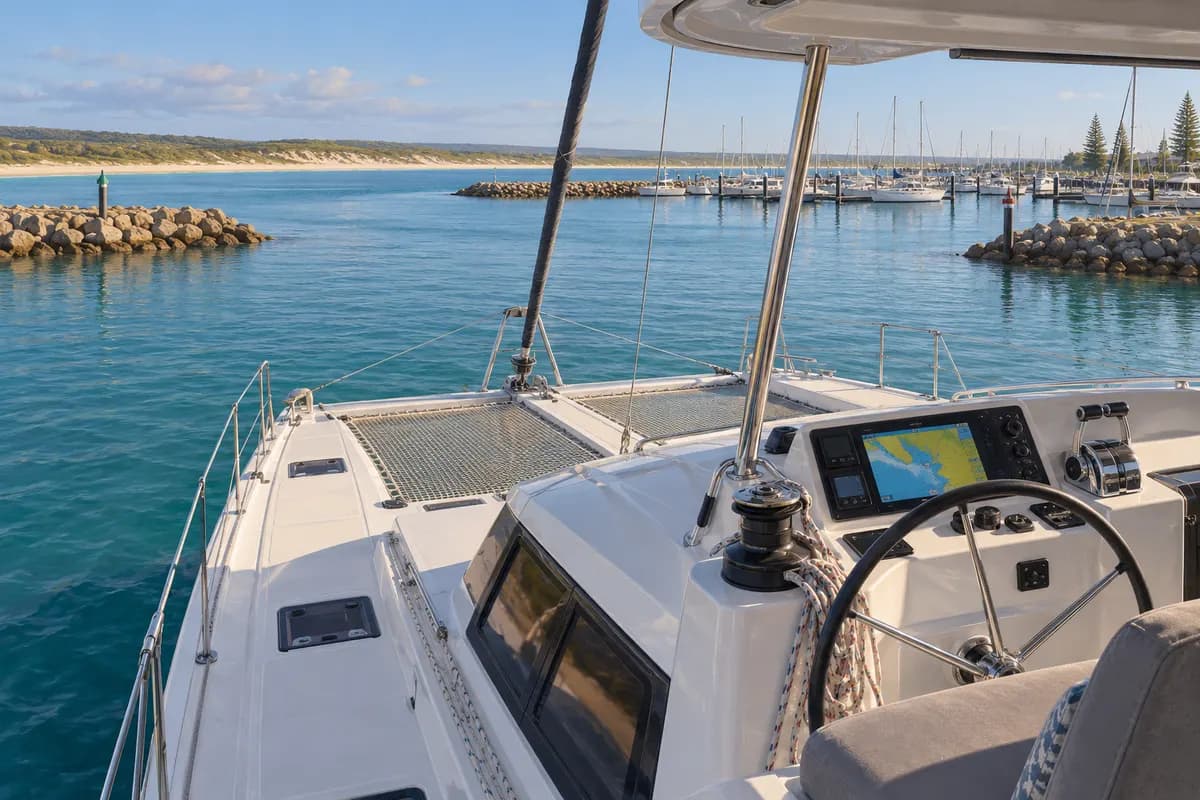
Dedicated cruising-catamaran training.
Important for sailors moving from monohulls into:
- Who it suits
- Monohull sailors moving to a catamaran, especially before a charter.
- What it is not
- A monohull certificate does not cover a catamaran, whatever the charter form says.
Primary source: American Sailing certifications. Course structures and prerequisites can change; confirm the current version with the training body and school.
The course in context
Cruising Catamaran training addresses the differences that matter when moving from one hull to two. A spacious deck does not mean a catamaran handles like a wider monohull. Manoeuvring, windage, visibility and the way sail power is managed deserve deliberate practice before taking charge of a charter.
Before you start
American Sailing lists ASA 101, 103 and 104 as prerequisites. Ask whether ASA 104 is completed beforehand or within a combined programme and how each standard is assessed. Existing monohull experience is useful, but tell the instructor how much time you have actually spent controlling a catamaran.
Skills you will develop
Powered manoeuvring
Develop familiarity with the catamaran’s propulsion arrangement and response at low speed. The aim is planned movement with an agreed crew briefing, rather than treating two engines as a cure for every difficult approach.
Sailing characteristics
Understand how catamaran behaviour affects sail-handling decisions. Do not use the amount of heel as your only feedback about how hard the boat is working.
Anchoring and onboard layout
Explore the equipment and routines specific to the training boat, including how crew work across a wider platform. Clear communication is especially valuable when people cannot easily see one another.
Training and assessment
This is practical multihull training with knowledge and skill assessment. Ask about the size and layout of the training boat, opportunities for each student to manoeuvre it, and whether the course includes liveaboard time. The school should explain how it covers catamaran-specific tasks rather than just providing a cruise on a catamaran.
Questions to ask the school
- How much individual engine-handling practice is included?
- Which catamaran-specific anchoring and sail-handling tasks are taught?
- Does the charter company accept my training and experience for its boat?
Related learning
Other American Sailing courses
ASA 101: Keelboat 1
American Sailing’s entry certification, on a small keelboat in moderate conditions.
ASA 102: Keelboat 2
Develop more precise sail trim, boat balance and small-keelboat handling.
ASA 103: Coastal Cruising
The first cruising-boat certification: auxiliary power, day passages, moderate conditions.
ASA 104: Bareboat Cruising
Cruising skills for multi-day bareboat sailing; charter acceptance depends on the operator.
ASA 105: Coastal Navigation
The shorebased navigation certification: charts, plotting, tides, passage planning.
ASA 106: Advanced Coastal Cruising
Plan and lead extended coastal passages by day and night, with stronger navigation, watchkeeping and crew-management skills.
ASA 107: Celestial Navigation
Sextant work: sight taking, sight reduction, fixing a position without electronics.
ASA 108: Offshore Passagemaking
The top of the ASA cruising pathway: extended offshore passages and real self-sufficiency.
Which course should you actually book?
Three questions — your experience, the boat you want to sail, and your goal — give you a starting course and the schools that teach it near you.