
Home / RYA / RYA Youth Sailing Stage 4
RYA Youth Sailing Stage 4
The last stage, and the handover into the advanced modules and the adult scheme.
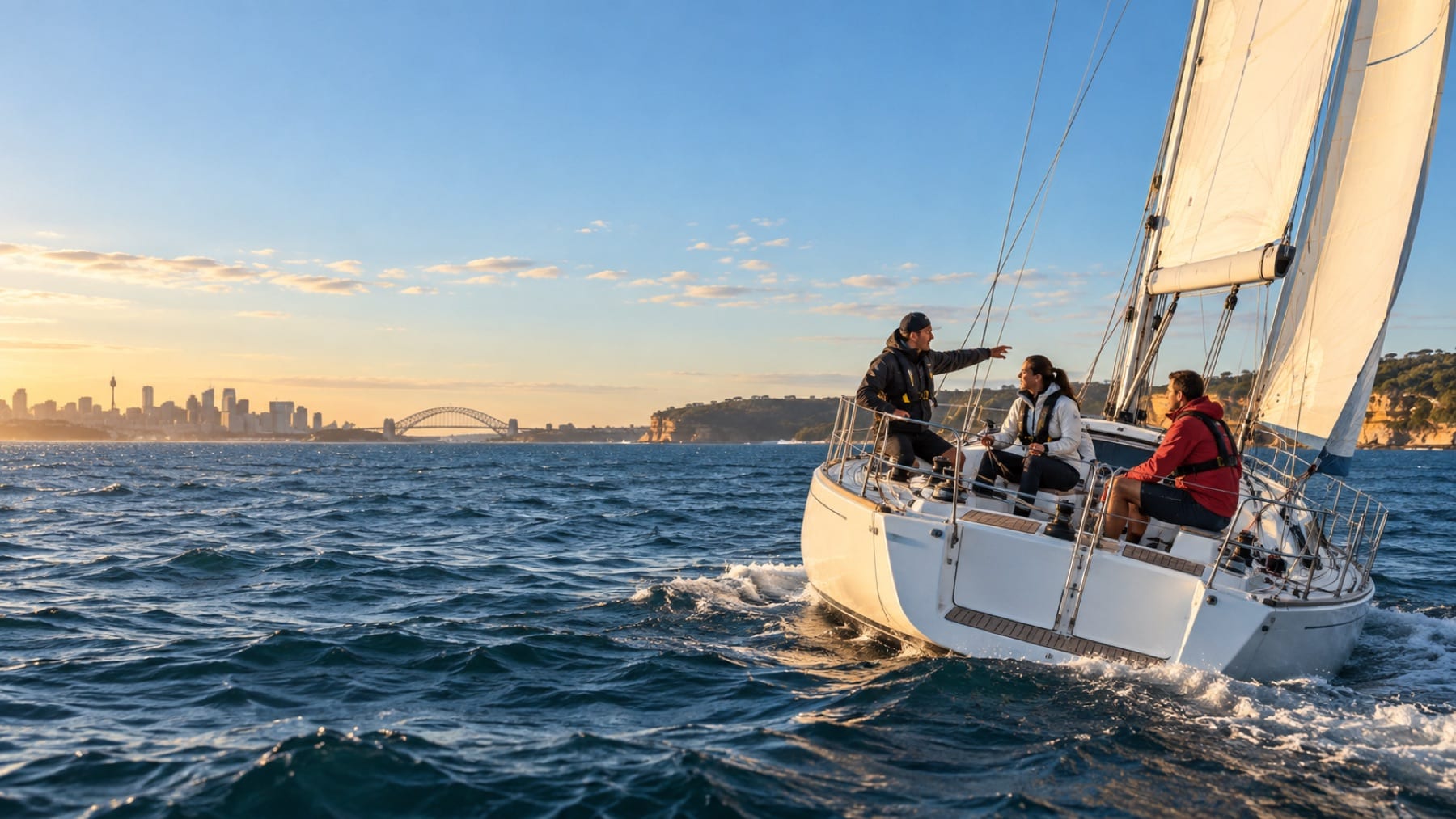
Stage 4 completes the RYA Youth Sailing Scheme.
It covers:
From Stage 4 a young sailor moves into the same advanced modules as adults — Seamanship Skills, Day Sailing, Sailing with Spinnakers and Performance Sailing — or into racing.
- Who it suits
- Experienced young sailors finishing the youth scheme.
- What it is not
- Not an instructor qualification. Instructor training has its own minimum age and entry requirements.
Primary source: RYA training. Course structures and prerequisites can change; confirm the current version with the training body and school.
The course in context
Stage 4 adds the teamwork of sailing a double-handed dinghy. A young sailor learns that good boat handling depends on the helm and crew coordinating their actions. It is a useful progression even for someone who already feels confident in a single-handed boat.
Before you start
Stage 3 skills or comparable sailing experience are needed. Ask how the centre pairs sailors and whether learners rotate roles. The course should develop both understanding and cooperation, rather than assigning one person the same task throughout.
Skills you will develop
Helm and crew roles
Understand how steering, sheets and balance interact between two people. Each sailor benefits from knowing what the other needs during a manoeuvre.
Communication
Prepare turns with clear, timely calls and responses. Communication is a practical sailing skill, not simply a matter of being louder.
Solving problems together
Respond to difficulties without both people attempting incompatible actions. Good teamwork makes the boat more controlled and the session more enjoyable.
Training and assessment
Expect double-handed practical work with feedback on coordination as well as individual handling. Course arrangements depend on the available boats and group. Completion opens options for further skills training rather than requiring a move into racing.
Questions to ask the school
- Will learners swap helm and crew roles?
- How are pairs matched?
- Which advanced modules can follow?
Related learning
Other RYA courses
RYA Sailing Pathway
The whole RYA cruising route in order, and where you are allowed to skip a step.
RYA Cruising Level 1: Start Sailing
A short introduction aboard a small cruising yacht — the shortest way to find out whether yachting suits you.
RYA Cruising Level 2: Basic Skills
The follow-on from Level 1, adding real boat handling on a small cruising yacht.
RYA Start Yachting
Two days aboard a cruising yacht, for complete beginners who want a genuine taste of yachting.
RYA Day Skipper Theory
The classroom half of Day Skipper: charts, tides, buoyage, collision regulations and passage planning.
RYA Day Skipper Practical Sailing
Five days in which you stop being crew and start being the person responsible for the boat.
RYA Coastal Skipper Practical
Skippering beyond familiar water and beyond daylight — longer passages, night pilotage, heavier weather.
RYA Coastal Skipper and Yachtmaster Offshore Theory
The advanced shorebased course: tidal work, passage planning, meteorology and collision regulations at Yachtmaster depth.
Australian schools using RYA
These schools advertise training under the RYA system. This does not confirm that every school currently runs RYA Youth Sailing Stage 4; check the current course list directly.
Which course should you actually book?
Three questions — your experience, the boat you want to sail, and your goal — give you a starting course and the schools that teach it near you.